


Popcorn ceiling removal without the dust storm
Scraping a ceiling is messy work, and most of the horror stories are about the mess rather than the ceiling. Contained properly, it is a clean job with a very large payoff.
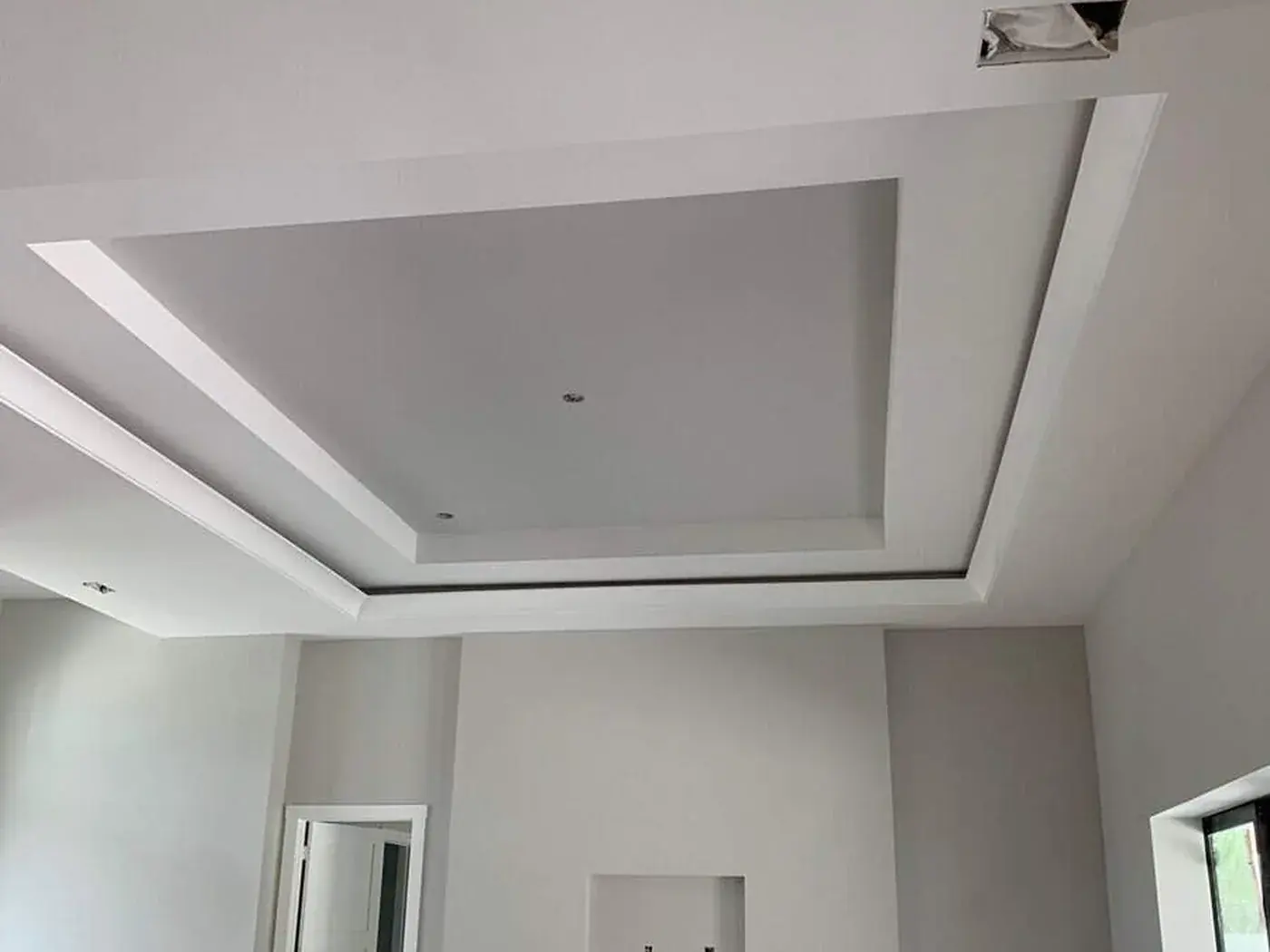
Textured ceilings date a house faster than almost anything else. They also collect dust, they are impossible to clean and they make a room feel lower than it is. Taking one down changes how the whole space reads.
Doing it well means containing the room first: plastic wall to wall and floor to ceiling, everything sealed, and the debris coming out in sheets rather than spreading through the house.
How the room is handled
- Full containment — floors and walls sheeted, doorways sealed, vents covered so nothing travels through the air handler
- Scraped wet, which cuts airborne dust dramatically compared with dry scraping
- Skim coated and sanded until the ceiling is genuinely flat, not just de-textured
- Your choice of finish — smooth, light orange peel or knockdown
- Primed and painted with a proper ceiling coating
- Debris removed — the containment comes out with the mess inside it
If the house is older, test first
Textured ceiling material installed before the early 1980s can contain asbestos. That is not a reason to panic and it is absolutely a reason to check before anyone scrapes anything.
Testing is inexpensive: a small sample goes to a lab and you have an answer in a few days. If it comes back positive, removal is a licensed abatement job and we will point you to someone qualified rather than take it on.
If it comes back clear, we get on with it.
Lighting changes too
A flat ceiling reflects light differently than a textured one, and it also shows framing imperfections that texture used to hide. That is exactly why the skim coat stage matters — it is most of the work and all of the result.
Test the ceiling before anyone scrapes it
Popcorn ceilings sprayed in Florida homes built before roughly 1980 can contain asbestos in the texture itself. That is not a scare line, it is the reason the sequence matters. Before any scraping starts, a sample has to be pulled and tested by a qualified testing party that sends the material to a lab. Not us, and not a guess based on the age of the house. We do not scrape a ceiling that has not been cleared in writing.
If the result comes back clean, we schedule the removal like any other interior job. If it comes back positive, the work stops there. We do not perform abatement, and plastic sheeting and a respirator do not make it acceptable. You bring in a firm set up for that work, and once the ceiling is cleared we come back for the skim coat, primer and finish paint.
Houses from the mid-eighties onward are usually a different story, but age alone is not proof. Plenty of homes in North Port and Port Charlotte were built in phases, remodeled twice, and have one hallway ceiling that does not match the rest. When the history is unclear, we test.
How the texture comes off and the ceiling flattens
Everything below the ceiling gets covered first: floors, cabinets, the tops of the walls, light fixtures dropped or masked. Plastic runs wall to wall, because wet popcorn falls in heavy grey clumps and tracks into carpet fast. The texture is misted with water and left to soften for several minutes, then scraped with a wide blade held at a low angle. Rushed misting gouges the drywall. Too much water swells the paper face and creates work that was not there before.
Scraping is the loud part, not the finish. What makes a ceiling look new is what follows it: two skim coats of all-purpose joint compound across the whole surface, with seams and screw dimples filled where the old texture had been hiding them. We sand with 120 grit, finish at 150, then vacuum and wipe down before anything else touches it.
Next comes a drywall primer over the fresh compound, because bare compound drinks paint unevenly and shows every patch through the topcoat. The finish is two coats of flat ceiling paint. Flat is not a cost decision on a ceiling: any sheen above it telegraphs every roller lap under afternoon light from a west-facing window.
When we will tell you not to remove it
Scraping is not always the right money. A popcorn ceiling that was painted over years ago, common in rentals and in houses that have been flipped once already, will not soften properly with water. The paint film seals the texture. Removal then becomes dry chipping or full encapsulation, and the hours climb well past what most people expect when they call about a single bedroom.
In that situation the honest options are a skim coat straight over the existing texture, or leaving the ceiling alone and spending the money on walls and trim instead. We will price both and say which one we would choose in your house. A written fixed price is easier to compare when it is not hiding a discovery halfway through the week.
The same answer applies to a seasonal condo you are about to list. Buyers in Venice and Englewood do notice popcorn, but a flat ceiling in one room and popcorn in three reads worse than a consistent house. Either do the main living areas together or do none of them. Before a sale we usually suggest putting the budget into interior painting of walls and trim first, ceilings second.
Scheduling popcorn ceiling removal around the weather
Interior work sounds weather-proof until you watch joint compound behave in July. Skim coats and primer need the air to take moisture away, and when the dew point sits in the mid-seventies with storms rolling through most afternoons, a coat that dries in four hours in February can still be soft the next morning. We run the air conditioning through the job and plan the coat schedule around what the air is actually doing rather than a day count we cannot hold.
That is also why popcorn ceiling removal Sarasota homeowners often book the work for the off months. From May through October the seasonal houses sit empty, and an empty house is the cheapest house to work in. Furniture is already out, nobody is sleeping under plastic, and staging stays set up between coats.
For occupied homes we work room by room, seal the doorway, and keep the dust in one zone. The painting carries a one year workmanship warranty tied to the scope written in your quote. If you decide to drop a coat or trim back the prep to save money, that reduced portion is not covered, and we put it in writing so there is nothing to argue about later.
What people ask about popcorn ceiling removal
Do I need to move out?
No. The work is contained room by room, so the rest of the house stays usable. We do ask that you keep pets and children out of the room being worked on.
How long does one room take?
Scrape, skim, sand, prime and paint is typically two to four days per room, because each coat has to dry. Larger open-plan areas run longer.
Smooth or knockdown?
Smooth looks the most current and is the least forgiving of an uneven ceiling. A light knockdown hides more and still looks nothing like popcorn. We can show you both before deciding.
Is asbestos testing included?
We arrange the sample and tell you what it costs — it is a small, separate expense. On homes built well after the early 1980s it is usually unnecessary.
Our ceiling was painted over years ago. Can it still be scraped?
Sometimes, but plan on more hours and a higher number. Paint seals the texture so water cannot get underneath it, which turns soft scraping into dry chipping. We test a two foot square first and watch how it releases. If it fights us, we will quote a skim coat over the top instead, which usually lands cheaper and gives you the same flat ceiling at the end.
What happens if the asbestos test comes back positive?
We stop, and nothing gets disturbed. Abatement is separate work handled by a firm set up for it, and we will not scrape a ceiling that has not been cleared. Once it has been dealt with and you have documentation in hand, we are glad to come back for the skim coat, primer and finish paint. A positive result does not mean the room cannot look good afterward.
Will the drywall seams and screw lines show once the texture is gone?
They will, until they are filled. Builders sprayed popcorn partly because it hides a fast tape job. Underneath you often find thin mud over the seams and dozens of screws that were never dimpled properly. That is why the price covers skim coating the entire ceiling rather than spot patching. A flat ceiling with visible banding across it looks worse than the popcorn did.
Can this be done while we are living in the house?
Yes, one zone at a time. We seal off the work area, cover floors and run the job so that a bathroom, a bedroom and the kitchen stay usable. Expect to be out of the affected rooms for the working days plus overnight drying.
If the house is empty for the season, tell us at the estimate. An empty house goes faster and we price it that way.
Popcorn Ceiling Removal near you
We work across Sarasota and Charlotte counties from our base in North Port, and travel south into Lee and Collier counties on request.
Want a price for popcorn ceiling removal?
Send a couple of photos and the address. You get a written fixed quote, usually the same business day.