


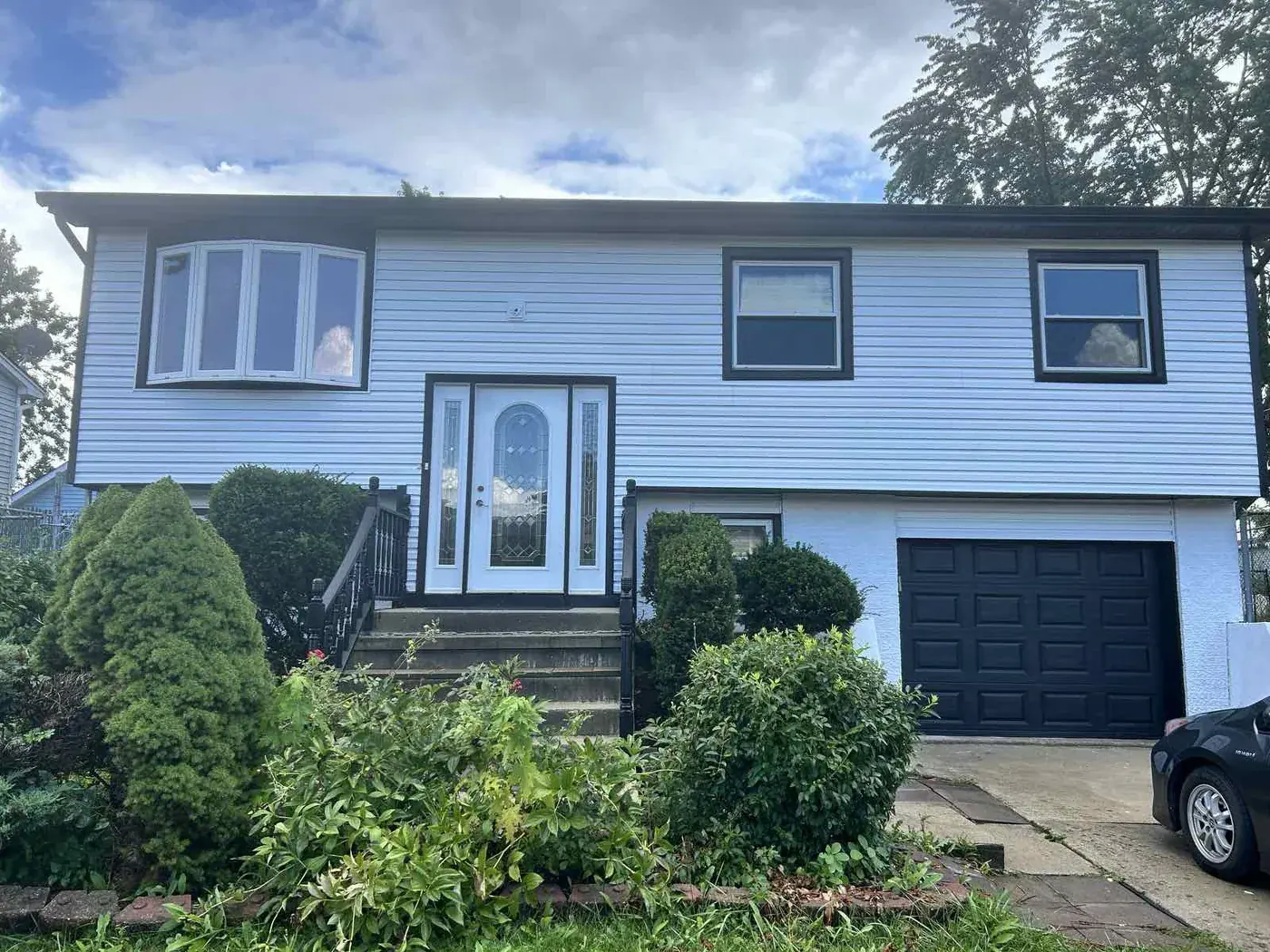
Pressure washing that cleans without carving lines
Most of what looks like dirt on a Florida house is organic: algae, mildew and the black streaking that grows in shade and humidity. That needs the right solution more than it needs pressure.
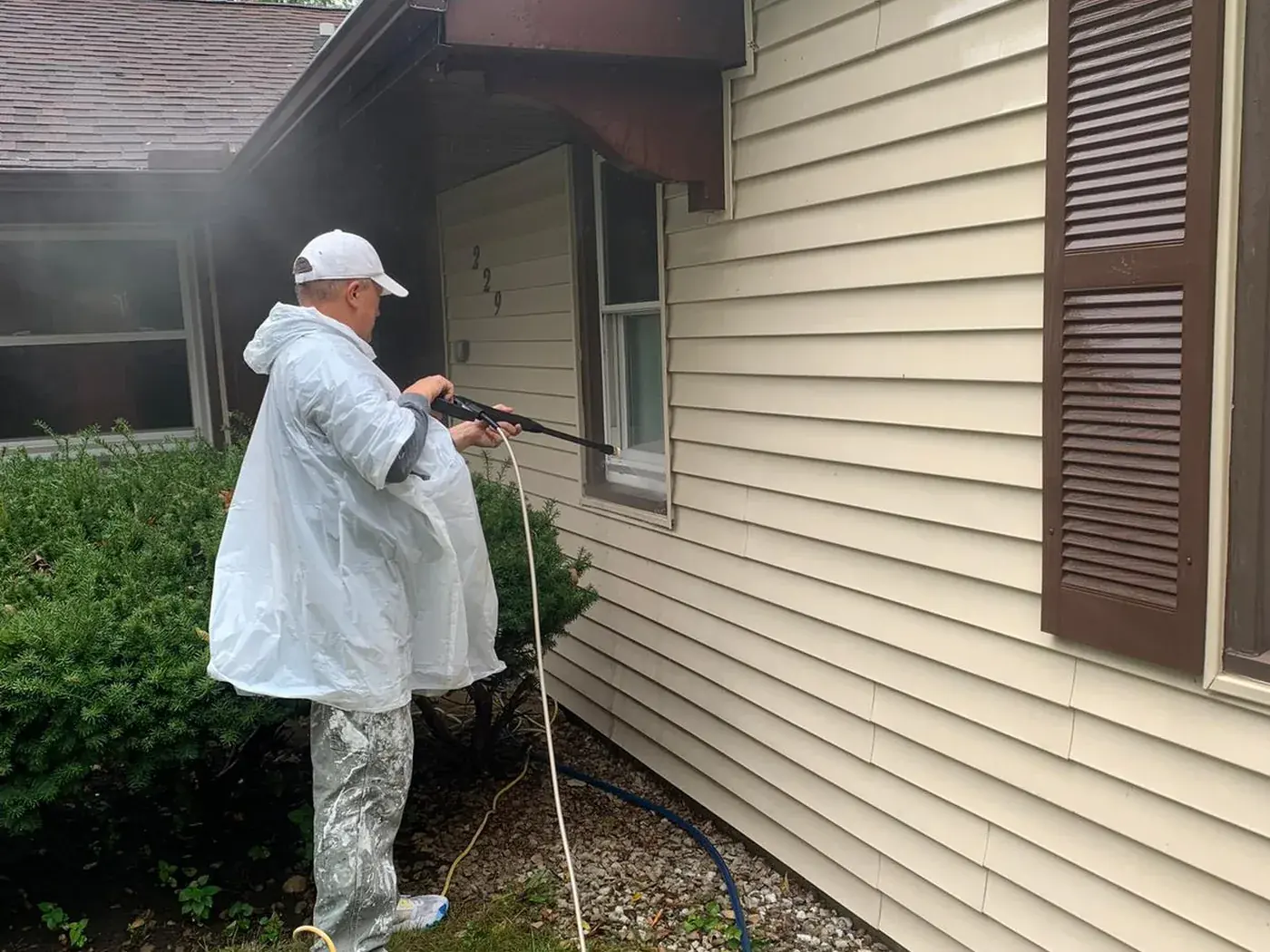
High pressure aimed at stucco strips the texture. Aimed at a roof it takes granules off shingles or lifts tiles. Aimed at painted trim it drives water behind the coating. Pressure feels like the answer and is usually the problem.
Soft washing uses low pressure and a cleaning solution that kills the growth instead of blasting it off. The surface comes back clean and stays clean considerably longer, because the organism is dead rather than knocked loose.
What we clean
- House exteriors — stucco, block, siding, soffits and gutters
- Roofs — soft wash only, never high pressure on tile or shingle
- Driveways, walkways and pavers, where higher pressure is safe and appropriate
- Pool decks and lanais including cage frames and screens
- Fences and retaining walls
- Before painting — always part of an exterior job, never an add-on line
Plants, screens and neighbors
Cleaning solutions that kill algae will also burn landscaping if nobody is paying attention. Beds get wet down before, protected during and rinsed after.
The same care applies to screens, light fixtures, outlets and your neighbor's car. It is not complicated work — it just needs someone who is actually watching where the water goes.
Cleaning is not a substitute for paint
A wash makes a tired house look dramatically better and sometimes that is genuinely all it needed. If the coating underneath is chalking or failing, washing will reveal that rather than fix it — and we will tell you which one you are looking at.
Soft wash chemistry versus high pressure
Two completely different jobs get sold under one name. Soft washing applies a cleaning solution at garden hose pressure, lets it dwell long enough to kill and release the organic growth, then rinses. High pressure washing uses mechanical force to blast material off a hard surface. Most of what stains a Florida house — mildew, algae, the black streaking on a north wall — is alive, and killing it works better than shooting at it.
That is why stucco, painted siding, soffits, fascia and screened enclosures get soft washed. The solution does the cleaning, the water only carries it away, and the wall is not driven full of moisture in the process. Blasting a stucco elevation at high pressure forces water past hairline cracks and behind the paint film, and the damage does not show up until the wall starts flashing or bubbling a few months later.
High pressure has its place: concrete driveways, pavers, unpainted block, garage slabs. Even there, a surface cleaner attachment beats a wand, because it holds a consistent distance and avoids the zebra striping that a hand-held tip leaves behind on a big flat driveway.
Matching PSI to the surface in front of you
Pressure is a setting, not a virtue. Concrete driveways and paver aprons tolerate high pressure, commonly in the two to three thousand PSI range through a rotating or surface cleaner head. Painted stucco and siding get a wide fan at a few hundred PSI, essentially a rinse. Soft wood — fence pickets, deck boards, arbors — stays well below a thousand and the tip keeps moving. Screens and lanai cages get rinsed, never blasted.
Tile roofs are their own category. They can be cleaned, but the method is low pressure chemistry with careful rinsing, because walking a tile roof breaks tiles and pressure drives water under the courses and strips the surface off the tile. Anyone offering to pressure wash a tile roof is offering you a future roof repair.
Distance and tip angle matter as much as the number on the machine. The same pressure that cleans a driveway from twelve inches will etch the concrete from two. Where paver sand has washed out, cleaning will expose it, so we tell you beforehand that re-sanding is likely to follow — that is a hardscape task, not something we take on.
Mildew, algae and orange irrigation staining
Shaded north and east walls grow the black and green film that most pressure washing in Port Charlotte is called out for. It is biological, it comes back, and the interval depends on how much sun and airflow that wall gets. A wall under a large oak with a hedge tight against it will regrow within a year or two no matter how well it was cleaned. Trimming the vegetation back does more for the next cleaning than the cleaning itself does.
Orange staining is a different animal. That is iron from well water irrigation, and it is a mineral deposit rather than growth. Chlorine-based cleaners will not remove it — they sometimes set it. It takes an oxalic or other acid-based rust remover, applied to the stain and rinsed, and even then a slab that has been sprayed by the same head for a decade may not come fully clean. We will do a test patch and show you the realistic result before quoting the driveway.
Lovebug season and heavy pollen add a seasonal layer on top of all this, particularly on the west elevation and around entries. Those wash off easily. It is the mineral staining and the long-established growth that decide what a wash can actually deliver.
Washing to clean versus washing to paint
A maintenance wash and a pre-paint wash are held to different standards, and it is worth knowing which one you are buying. A maintenance wash makes the house look clean. A pre-paint wash has to leave a surface that a coating will stick to, which means all chalk off the old paint, all growth killed rather than knocked back, loose material removed and any efflorescence dealt with.
The test is simple. Run a dark cloth or your hand down a washed wall; if it comes away powdery, the chalk is still there and the paint will bond to powder instead of stucco. On a chalked-out west elevation that can mean going back over the same wall a second time before anyone opens a can.
Drying time then sets the schedule. Stucco and block hold water, so a washed wall needs real drying time before priming or painting, and in the rainy season that gap widens. We build it into the sequence on exterior painting jobs rather than washing and coating on the same day to save a visit. If you only want the house cleaned, say so and we will quote that alone.
What people ask about pressure washing & soft wash
Will pressure washing damage my stucco?
It can, at the wrong pressure. That is exactly why stucco gets soft washed. Done right there is no etching, no texture loss and no stripe pattern.
How long does the clean last?
Longer with a soft wash than with plain pressure, because the growth is killed rather than knocked off. Shaded north walls and anything under trees will always regrow first.
Do you clean roofs?
Yes, soft wash only. Tile and shingle roofs are both damaged by high pressure, and roof cleaning is a place where doing it cheaply is expensive.
Can I book a wash on its own?
Of course. Plenty of our washing work has nothing to do with painting — it is people getting a house ready to sell, to photograph or just to look after.
Will pressure washing remove the orange stains on my driveway?
Often, but not always completely. Orange staining is iron deposited by well water irrigation, and it needs an acid-based rust remover rather than the chlorine mix used for mildew — pressure alone does almost nothing to it.
Where the same sprinkler head has been hitting a slab for years the mineral is deep in the concrete. We do a test patch first and show you the result, so you can decide before paying for the whole driveway.
Can you clean our tile roof?
Tile roofs are cleaned with low pressure and chemistry, never blasted. High pressure breaks tiles, strips the surface finish and pushes water up under the courses, and foot traffic on brittle tile causes its own damage.
We are honest about the limits: where the tile is old and fragile, or the pitch and access make safe work impractical, we say no rather than take the risk with your roof.
Do the plants and the lanai screens survive the chemicals?
With the normal precautions, yes. Beds and shrubs get pre-wetted before the solution goes on and rinsed thoroughly after, which dilutes anything that reaches them. Delicate plantings get covered.
Screens are rinsed rather than pressured, and screen mesh and the aluminium frame get a plain water flush afterwards so nothing dries on them. Nobody should be pointing a high pressure tip at a screen panel.
How long after washing can the house be painted?
Long enough for the stucco or block to actually dry, which is more than a few hours. Masonry holds water in the wall, and painting over a damp substrate risks poor adhesion, blistering and flashing.
In the dry season a day is often enough. In August, with high humidity and afternoon storms, it can take longer, and we schedule the wash and the first coat as separate visits rather than squeezing both into one day.
Pressure Washing & Soft Wash near you
We work across Sarasota and Charlotte counties from our base in North Port, and travel south into Lee and Collier counties on request.
Want a price for pressure washing & soft wash?
Send a couple of photos and the address. You get a written fixed quote, usually the same business day.