


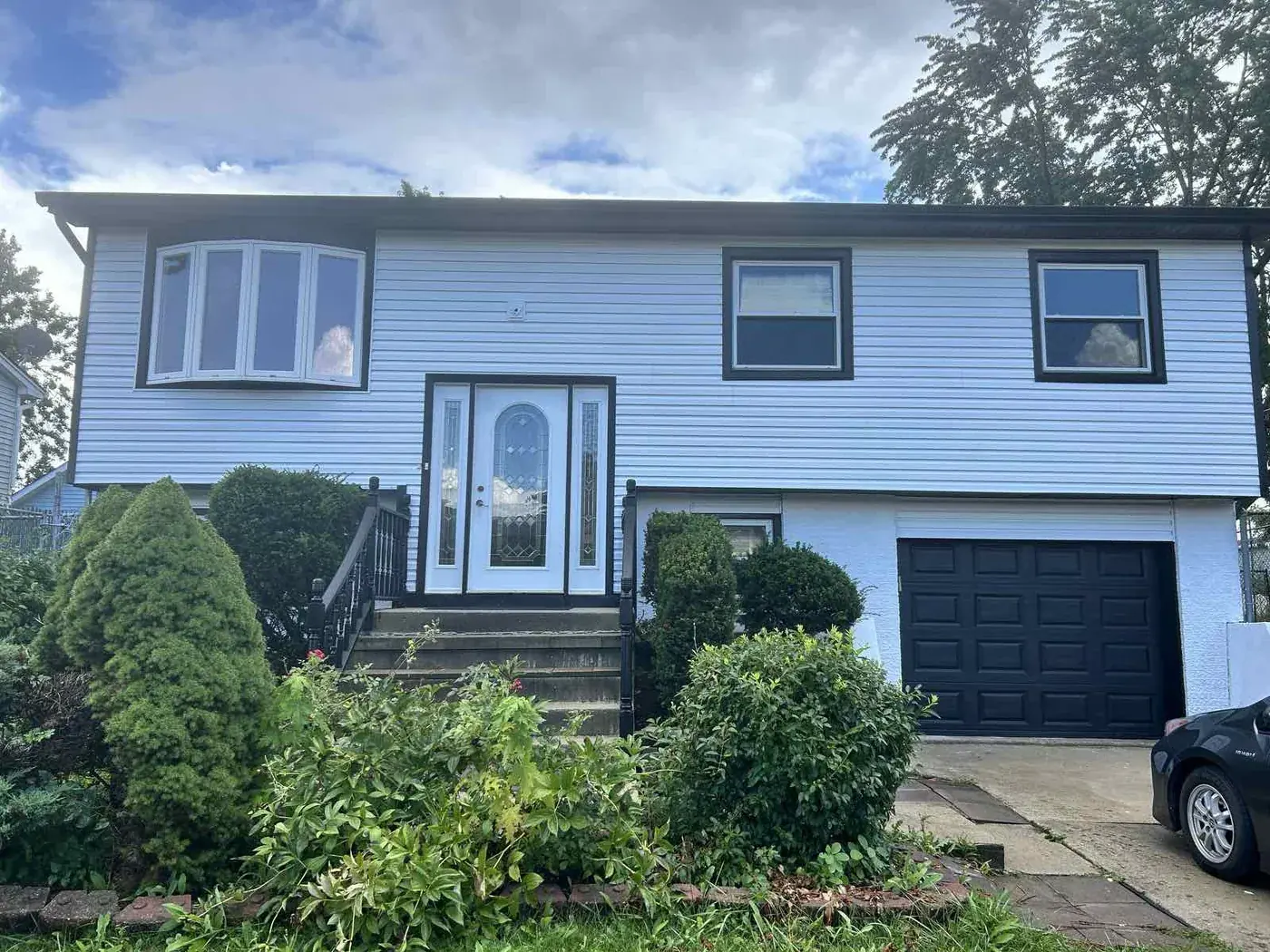
Doors, trim and millwork — sprayed, not brushed
Doors and trim are maybe five per cent of the paintable surface in a house and most of what a visitor's eye lands on. They are also the surfaces that show brush marks, so they get sprayed.
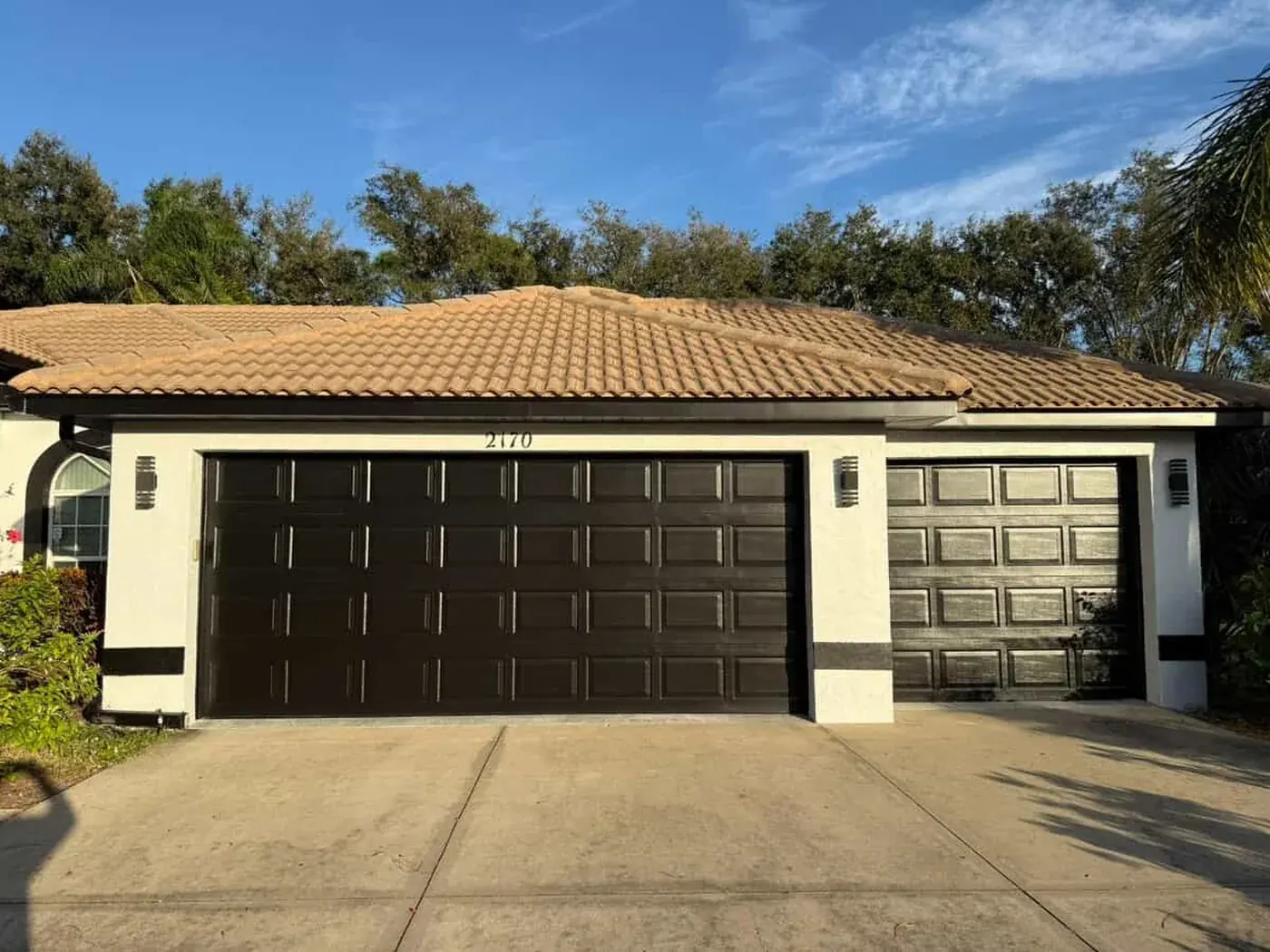
A front door is the single highest-return painting job there is. It is half a day, it costs very little next to a whole exterior, and it changes the first impression of the house completely — which is why it is the first thing agents ask for before a listing.
It is also the hardest small job to get right. A south or west-facing door in Florida bakes; a dark colour on a metal door can reach temperatures that soften an ordinary coating and print the weatherstrip into the finish. The product matters more here than anywhere else in the house.
What we cover
- Front and back doors — sanded, primed where the substrate needs it, sprayed, and rehung with hardware refitted
- Garage doors, including the steel panelled kind that everything else on the street has
- Baseboards, casing and crown moulding in a trim-grade enamel that stays hard instead of staying tacky
- Interior doors in bulk — a house full of dated doors sprayed in one run is far cheaper per door than doing two
- Stair rails, newels and balusters, where brushwork shows most
- Shutters and decorative millwork, taken off and sprayed flat wherever they will come off
Why spraying, and what that means for your house
Brushed trim carries brush texture, and texture on a surface people run their hands along collects dirt. Sprayed trim is flat and hard and wipes clean. The cost is masking: spraying means the room around the trim has to be sealed off properly, and that time is real.
Where a room cannot be masked sensibly — a single door in an occupied living room with furniture that cannot move — we will brush and lay it off carefully and say so. We would rather do that than hand you a room with overspray in it.
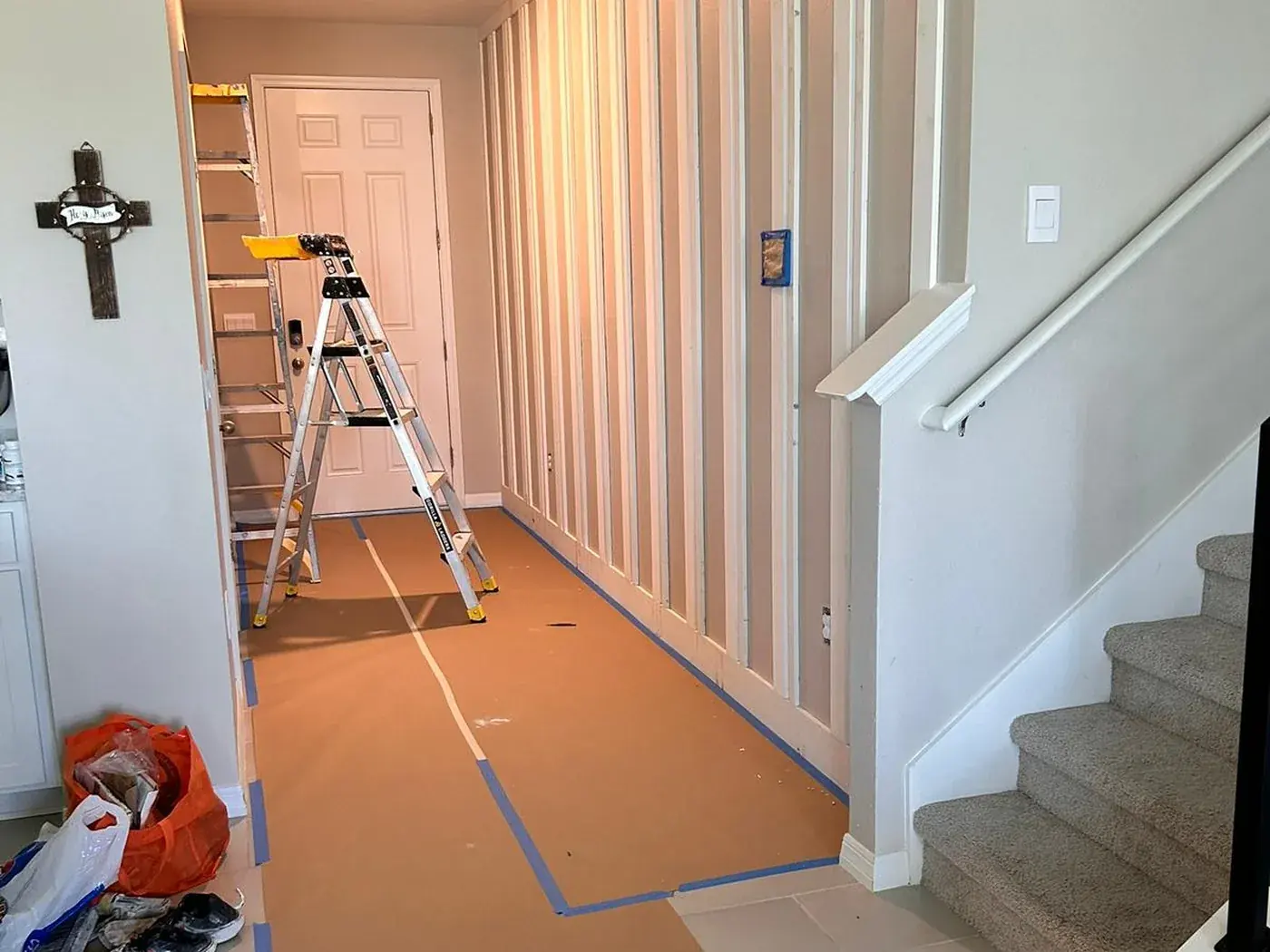
Colours that survive the sun here
Deep colours on a west-facing metal door are the ones that fail. If you want a dark front door on that elevation, the answer is a product rated for heat build-up rather than a lighter colour you did not want — we will bring the option to the estimate.
Front doors that take the full afternoon sun
A west-facing front door in Southwest Florida gets the hardest UV exposure of any surface on the house except the roof. Add reflected heat off a light driveway and a dark slab under the entry, and surface temperatures climb well past what the paint can on the shelf was tested against. That is why front doors fail years before the walls around them, and why a door repaint is a job worth doing properly rather than quickly.
Preparation follows the substrate. Steel doors get degreased, any rust spots taken back to sound metal and spot primed with a rust-inhibitive primer. Fibreglass doors get scuffed and cleaned, because the factory finish is slick and a coating laid straight on it peels at the edges first. Wood doors get the bottom edge and the top edge checked, since those are the two places nobody looks and water sits.
Dark colours are the common request and they come with a warning. A deep charcoal or navy on a fibreglass or steel door in full sun can gain enough heat to distort the slab or stress the finish. We will paint it, and we will tell you first whether that particular door faces the wrong way for it.
Brushed, rolled or sprayed — choosing the finish method
Trim can be finished three ways and each is right somewhere. Brushing gives control in an occupied room, needs no masking beyond drop cloths, and leaves a slight brush texture that most people never notice on baseboard. Rolling with a small foam roller suits long runs of flat casing and gets a coat on quickly. Spraying gives the flattest, most furniture-like surface, which is why doors and the faces of built-ins are worth spraying when the room can be masked off.
The trade-off is masking. Spraying interior trim properly means plastic on walls, floors covered wall to wall, and a room out of use for the day. For a whole-house trim and door repaint that is time well spent. For four doors and a hallway it usually is not, and we will quote the brushed version instead of talking you into the bigger disruption.
Sheen does more for the look than the method. Satin on trim reads soft and hides the small waves in old wood; semi-gloss is crisper, wipes down better around door handles and kick marks, and shows every dent you did not fill. Kitchens, kids' hallways and rental turnovers get semi-gloss more often than not.
Baseboard, casing and crown in an occupied house
Interior millwork is detail work, and the detail that decides how it looks is the caulk line. Where baseboard meets a knockdown wall there is always a gap, and it moves as the house does. It gets filled with a paintable acrylic latex, tooled to a tight line, and left to skin before anything is painted across it. A fat, uneven bead is the single clearest sign of a rushed trim job.
Nail holes and joints get filled and sanded, not smeared. Mitres that have opened at the corners of door casing are filled and re-sanded so the joint disappears under the finish. Old oil-based trim, common in houses here from the eighties and earlier, gets sanded and primed with a bonding primer before waterborne paint goes on, because that transition is where peeling trim almost always starts.
Living with the work matters too. Doors come off hinges or get wedged open with the hardware removed rather than taped around, hinges stay unpainted, and we plan the order so you keep a bathroom and a bedroom door that closes. New crown, new baseboard and new casing we can install and finish; framing, cabinetry and structural carpentry are outside what we take on.
Garage doors, shutters and exterior millwork
Outside, the same rules apply with more weather behind them. Garage doors are usually steel and sit in full sun, so they are washed, dulled, spot primed where rust has started, and finished with an exterior acrylic that can move with the panel. A garage door that has chalked heavily needs the chalk washed off completely; paint over chalk is paint over powder.
Hurricane shutters, tracks and accordion housings can be repainted, and on Gulf-side houses from Siesta Key down to Englewood the salt film is what determines how long that lasts. Everything gets a fresh water wash first, and aluminium gets an appropriate primer rather than a topcoat straight on bare metal. We paint them; we do not supply, install, service or inspect shutters.
Exterior wood trim, fascia boards and column wraps get probed before pricing. Small areas of soft wood we can cut out and replace as trim carpentry. Wholesale rot, failing fascia along a roof line, or anything holding weight is a different trade and we refer it out rather than painting over it. Once it is sound, the exterior paint and the trim colour usually get done in the same visit.
What people ask about doors, trim & millwork
How long is the door out of action?
Usually not at all. We work in sections and the door is back on its hinges and closing the same day. If it comes off to be sprayed flat, we close the opening while it is out.
Can you match the trim white already in the house?
Yes. If you know the colour, we use it. If not we match the existing trim so the new work does not read as a slightly different white — the most common complaint after a partial trim job.
Is it worth doing the doors before selling?
It is the cheapest thing on the list that shows in a listing photo. Front door, garage door and a wash of the entry is a half-day job that changes the first photo people see.
Do you paint interior doors in place?
Hollow-core interior doors are normally sprayed in place with the opening masked. Solid doors and anything with a panel profile come off and get sprayed flat, which gives a better finish on the detail.
Can our fibreglass front door be painted a dark colour?
Usually yes, but the orientation decides it. A door in shade or on a north or east elevation takes a dark colour without much risk. The same colour on a west-facing door with no porch overhang can build enough heat to stress the slab and the finish.
We look at the exposure on the estimate visit and tell you plainly whether we would put that colour on that door, and what a shade or two lighter would do for the same look.
The bottom of a door casing is soft and crumbling. Can it be painted?
Not as it is. Soft wood means water has been getting in, and filler over it lasts a season before it moves again. The rotted section gets cut out and a new piece of casing scarfed in, then primed on all faces including the cut ends.
If the water source is still active — a leaking threshold, irrigation hitting the door, a failed flashing — that has to be dealt with first, and we will point out where it is coming from.
Do interior doors come off the hinges to be painted?
It depends on the method. Sprayed doors come off, get laid flat or hung on a rack, and go back after they have set, which gives the best finish and no brush marks. Brushed doors are normally painted in place with the hardware removed.
Either way hinges, strike plates and handles come off rather than getting taped, and we do not paint hinges. Bedroom and bathroom doors are scheduled so the house stays usable overnight.
Can accordion shutters and their tracks be repainted?
Yes, with the understanding that it is a paint job and nothing more. The slats, housings and tracks are washed to get salt and chalk off, dulled, primed where bare aluminium shows, and finished with an exterior coating. Moving parts get kept clear so they still operate.
We do not service, repair, install or inspect shutters, and we will not paint a mechanism that is already binding — get it working first.
Doors, Trim & Millwork near you
We work across Sarasota and Charlotte counties from our base in North Port, and travel south into Lee and Collier counties on request.
Want a price for doors, trim & millwork?
Send a couple of photos and the address. You get a written fixed quote, usually the same business day.