


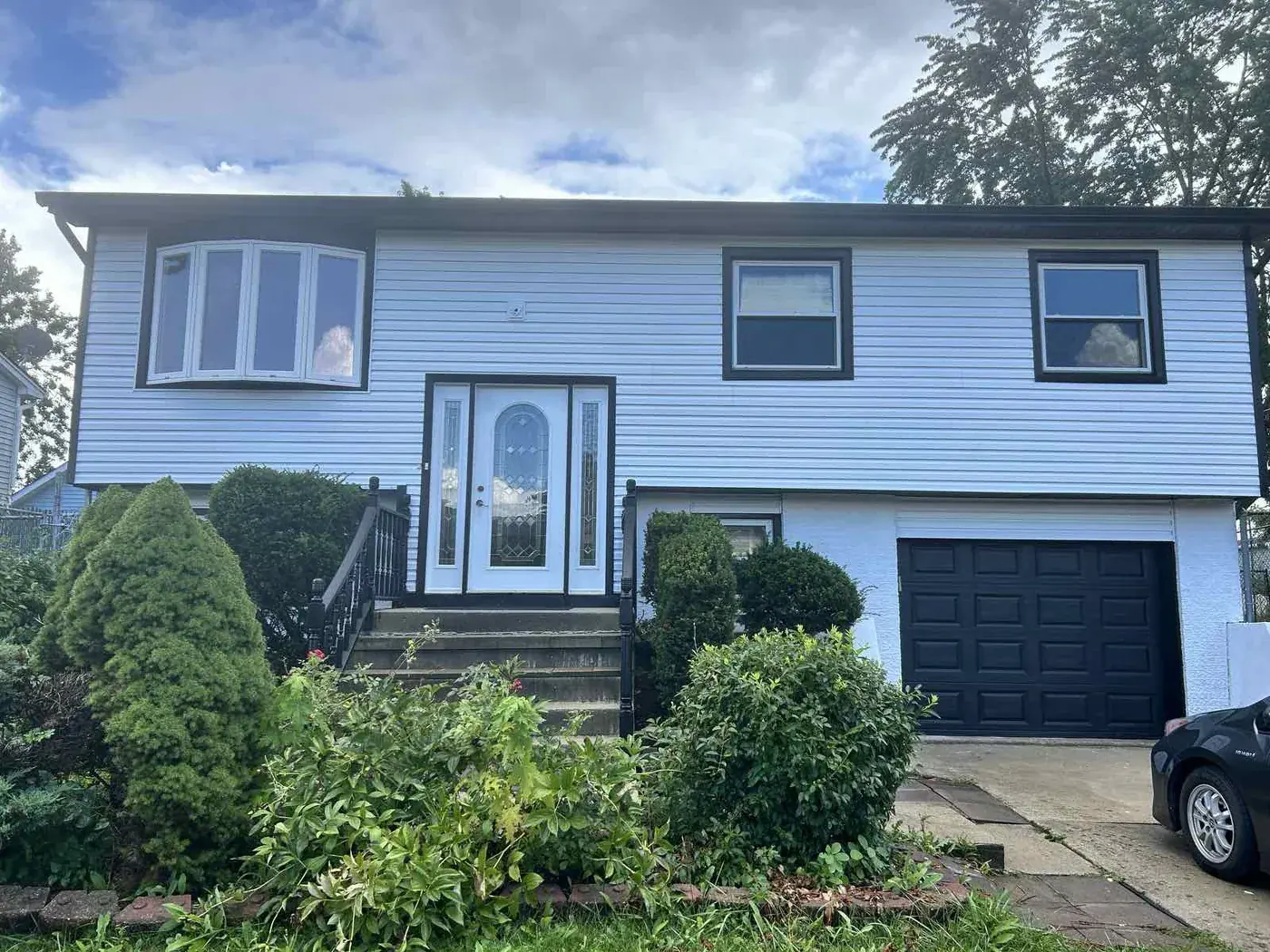
Exterior painting built for Florida weather
Sun, humidity, salt air and afternoon storms take a coat of paint apart faster here than almost anywhere else. The way to beat that is not a more expensive can — it is preparation nobody sees.
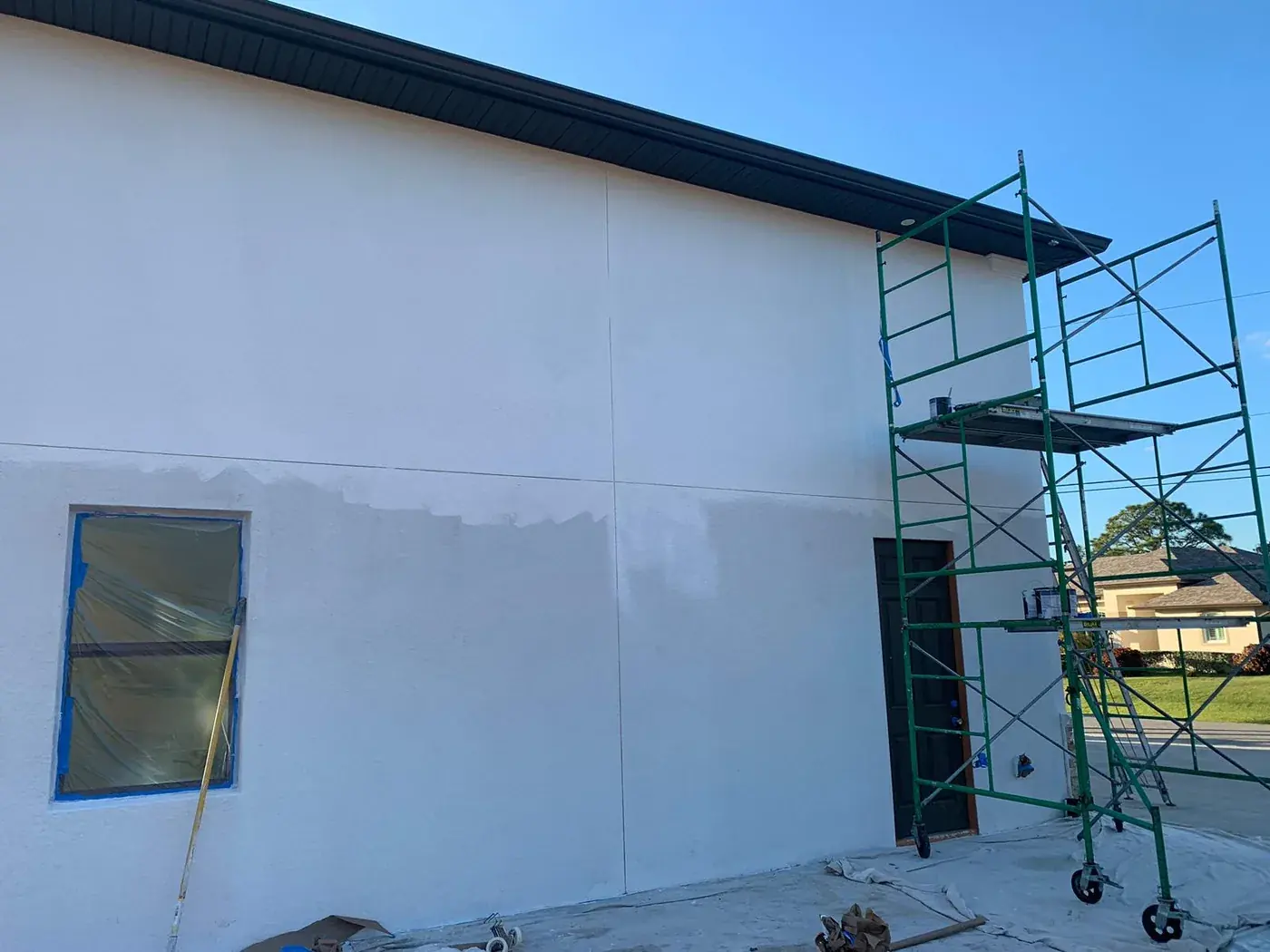
Walk any street in Southwest Florida and you can read the south and west walls of every house: those are the ones that fade, chalk and lose their sheen first, because they take the most sun. Shaded north walls on the same house can still look fresh.
An exterior repaint has to deal with that unevenness rather than paint over it. Chalked surfaces need washing and often a bonding primer. Hairline stucco cracks need opening and filling, not skinning over. Caulk lines around windows and door frames have usually gone hard and need cutting out.
What an exterior job includes
- Wash first — the whole envelope cleaned of chalk, mildew and salt film, then given time to dry
- Crack repair — hairline cracks opened, filled and textured to match the surrounding stucco
- Caulking — window and door perimeters, trim joints and penetrations re-caulked with a flexible exterior sealant
- Priming where it matters — bare stucco, patches, chalky areas and any bleed-through spots
- Two finish coats on the body, cut in clean at trim, soffit and fascia lines
- Doors, shutters and garage doors quoted with the house, not as an afterthought
Weather is part of the plan
From roughly June through September the afternoon storm is close to a daily event. Paint that goes on at two o'clock and gets rained on at four has to come off again.
So summer exteriors run early: wash and prep in the first half of the week, coats in the morning, and we stop when the sky says stop. It occasionally costs a half day. It never costs a whole elevation.
Between November and April the weather is on your side, which is why the calendar fills up — if you want an exterior done in season, book it early.
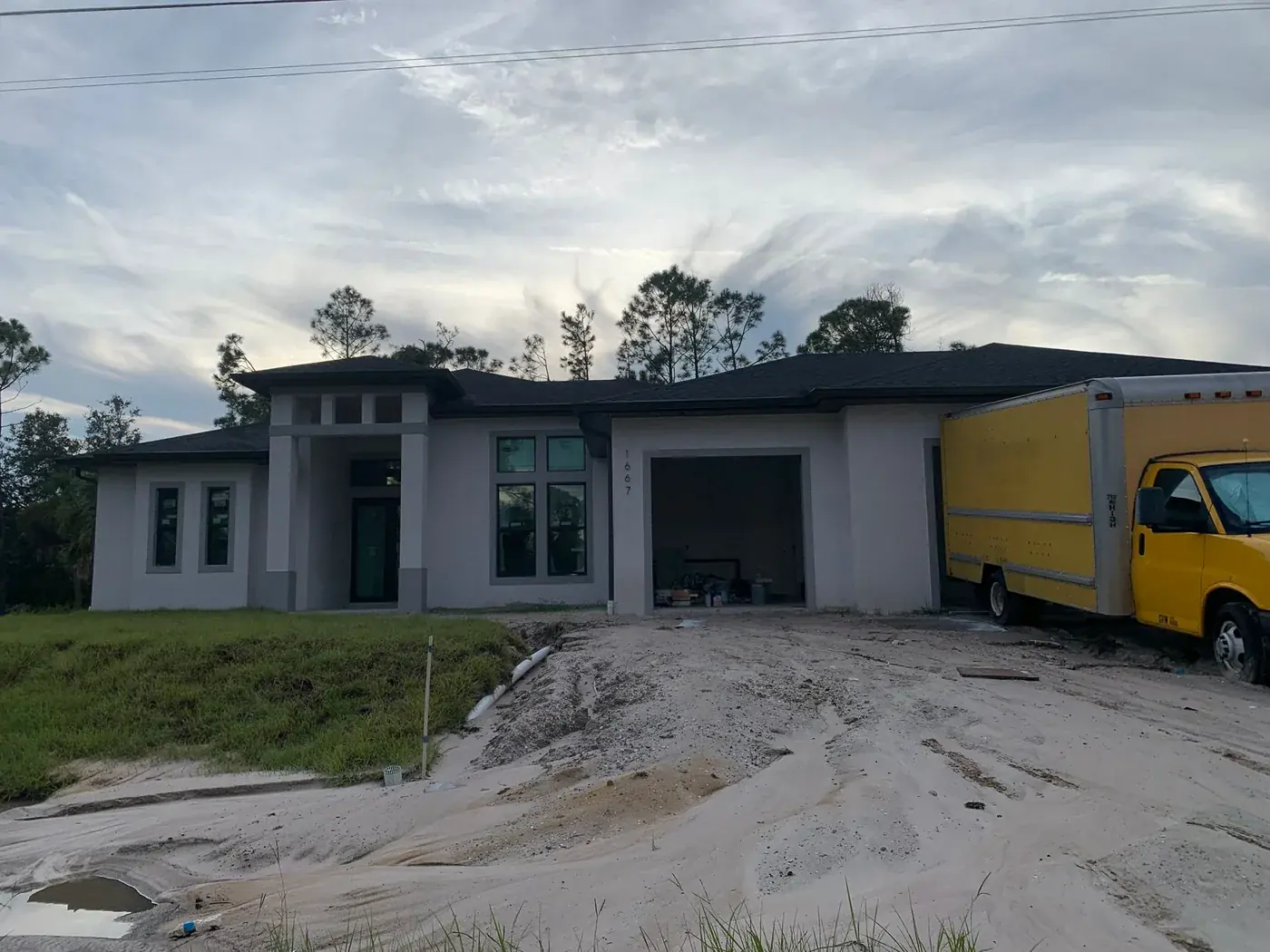
If your community has to approve the color
Plenty of neighborhoods here are deed restricted and the association has to sign off on exterior colors before anything is painted. We are happy to wait for that approval and to paint a sample board you can submit — just tell us when you ask for the quote.
Why the weather sets our exterior painting schedule
From June through November the afternoon is not ours. Storms build inland and move west most summer days, and a coat that has not had a couple of hours to set will wash streaks down a wall. So exterior work starts early and follows the shade around the house. The south and west elevations get painted in the morning while the block is still cool, not at two in the afternoon when surface temperature is running far above air temperature.
Dew point is the other limit. Most exterior acrylics want the surface at least five degrees above dew point with humidity falling, which in September can mean a seven o'clock start and an honest stop by three. Coating a wall that is about to sweat gives you weak adhesion and a chalky, blotchy look that only becomes obvious weeks later.
Hurricane season shapes the sequence as well. A whole house does not get opened up at once in August. One elevation is washed, prepped and carried through to its final coat before the next is started, so nothing is left primed and bare if a system turns up the Gulf.
What washing and prep do for a Florida exterior
Everything starts with a clean, sound surface. West-facing and Gulf-side walls in Englewood, Osprey and out toward Siesta Key carry a fine chloride film that has to come off, while shaded north walls usually carry mildew and algae that plain water will not touch. Those get a cleaning solution, dwell time and a full rinse — see pressure washing. Pressure by itself drives water into stucco and shreds wood; the chemistry does the work.
Well-water irrigation leaves orange iron staining along the bottom few feet of a wall, and it bleeds straight through fresh paint if it is only washed. Those bands get treated and spot primed with a stain-blocking primer before any topcoat. Lovebug residue in spring and late summer is acidic and comes off the surface rather than being sealed under it.
Then the unglamorous part that decides the result: failed sealant cut out and replaced at window and door perimeters, old chalky paint rubbed by hand and bound with a masonry conditioner if it comes off on your palm, loose paint on wood fascia scraped back to a sound edge and feathered. Bare wood and bare metal each get their own primer, not a hopeful extra topcoat.
What the one year workmanship warranty actually covers
Every job carries a one year workmanship warranty on the painting, tied to the scope written on your quote. If the coating peels, blisters or fails because of how it was prepped or applied, it gets corrected. With twenty-plus years of painting in the US behind the work, that is a warranty on the workmanship — not a claim that any coating stays new forever under Florida sun.
The other half of that is written down too. If you decide to drop the second coat, skip the wash, or leave a failing section alone to hold the price down, that reduced portion is not warranted, and your quote from West Coast Prep & Paint LLC says so in plain language before you sign. Better to lose the extra coat and keep your trust than pretend a one-coat job will behave like a two-coat job.
Prices are fixed and written. The estimate is free and the number on it is the number, listing elevations, surfaces, coat count and products. Change orders only appear when hidden rot or damage shows up behind a shutter or a downspout, and you see the cost before any of it is done — see pricing.
Getting exterior colours through an HOA committee
Plenty of houses in Venice Gardens, South Venice and the deed-restricted communities around Port Charlotte need architectural review approval before one wall changes colour. Committees often meet monthly, want the manufacturer name and colour number in writing, and sometimes hold you to an approved palette for body, trim and doors. Getting that approval is the homeowner's job, but the product data and drawdown samples you need to file it will be supplied.
Sample on the actual wall, never off a fan deck at the kitchen table. Florida light is unforgiving, and a soft greige on a card can read pink at four in the afternoon on a south elevation. Brushouts go up on two or three elevations so you can look at them morning and evening. Bright whites on stucco reflect hard; one step warmer or deeper usually looks better and stays cleaner.
If the paint is going on ahead of a sale, say so early. A pre-listing repaint has a different brief than a house you intend to keep for fifteen years — the money goes where a buyer and a listing photographer look, including the lanai, and you will be told which elevations can reasonably be left for later.
What people ask about exterior painting
How often does an exterior need repainting in Florida?
Sooner than up north. Sun, heat and humidity are hard on coatings, and coastal homes take salt on top of that. A well prepared stucco exterior generally holds up for years rather than decades — the honest answer for your house comes from looking at it, and that look is free.
Do you pressure wash before painting?
Always. Paint will not bond to chalk, mildew or salt film. Washing is part of the job, not a separate line item we add later.
Spray or roll?
Both, depending on the surface. Large stucco fields go faster and more evenly sprayed and back-rolled so the coating is worked into the texture. Trim, doors and tight areas near neighbors get brushed and rolled.
What about my plants and driveway?
Beds get covered, driveways and walks get masked, and anything overspray could reach is protected before we start. We would rather spend an hour masking than an afternoon cleaning.
How often does a stucco house here really need repainting?
Seven to ten years is typical for a well-prepped acrylic on stucco, but the house does not age evenly. The south and west walls fade and chalk first, and a Gulf-side elevation can be tired while the north wall still looks fine. Repainting the two hard elevations sooner and the whole house on a longer cycle is a legitimate way to spend less over twenty years.
Can you paint the outside at all during the rainy season?
Yes, most of the summer is workable if the day is managed. Mornings are dry, humidity drops for a few hours, and coatings can reach a rain-safe state before the storms build. Some days get called off, and a washed wall may sit a day before it is dry enough to coat. Nothing goes on if the wall will not be through its recoat window before weather arrives.
Can you repaint one bad wall instead of the whole house?
It can be done and sometimes it is the right call, with two warnings. A fresh coat next to a ten-year-old coat will not match even with the same colour code, because the old film has faded and lost sheen. Stopping at an inside corner or a change of plane hides the transition; stopping mid-wall does not. Expect the repainted elevation to look newer, because it is.
Do the screened lanai and pool cage frames get painted too?
They can, but aluminium is its own job: cleaning, removing oxidation, and a bonding primer made for non-ferrous metal before any finish coat. Screening is normally removed or masked, and it is often the moment to replace old screen anyway. That work is quoted separately from the house body — see lanai and pool deck painting.
Exterior Painting near you
We work across Sarasota and Charlotte counties from our base in North Port, and travel south into Lee and Collier counties on request.
Want a price for exterior painting?
Send a couple of photos and the address. You get a written fixed quote, usually the same business day.