


Deck and fence staining that keeps wood wood-colored
Stain on exterior wood in Florida is doing two jobs at once: keeping the sun from bleaching the surface grey and keeping water from soaking in during the rainy season.
Untreated wood outdoors here goes grey fast. That grey is UV damage to the surface fibers, and staining straight over it locks it in — the deck looks muddy and the stain does not grip properly either.
The fix is a clean and a brightener first, which takes the surface back to something close to fresh wood. Only then does color go on.
How wood gets treated
- Cleaned — dirt, algae and old failing finish removed at a pressure that does not fur the grain
- Brightened to neutralize the cleaner and bring the natural tone back before staining
- Dried properly — stain over damp wood is the most common reason a deck fails in one season
- Fasteners and boards checked, with loose screws reset and bad boards flagged for you
- Stain worked in, not floated on top, so it penetrates rather than sitting as a film that peels
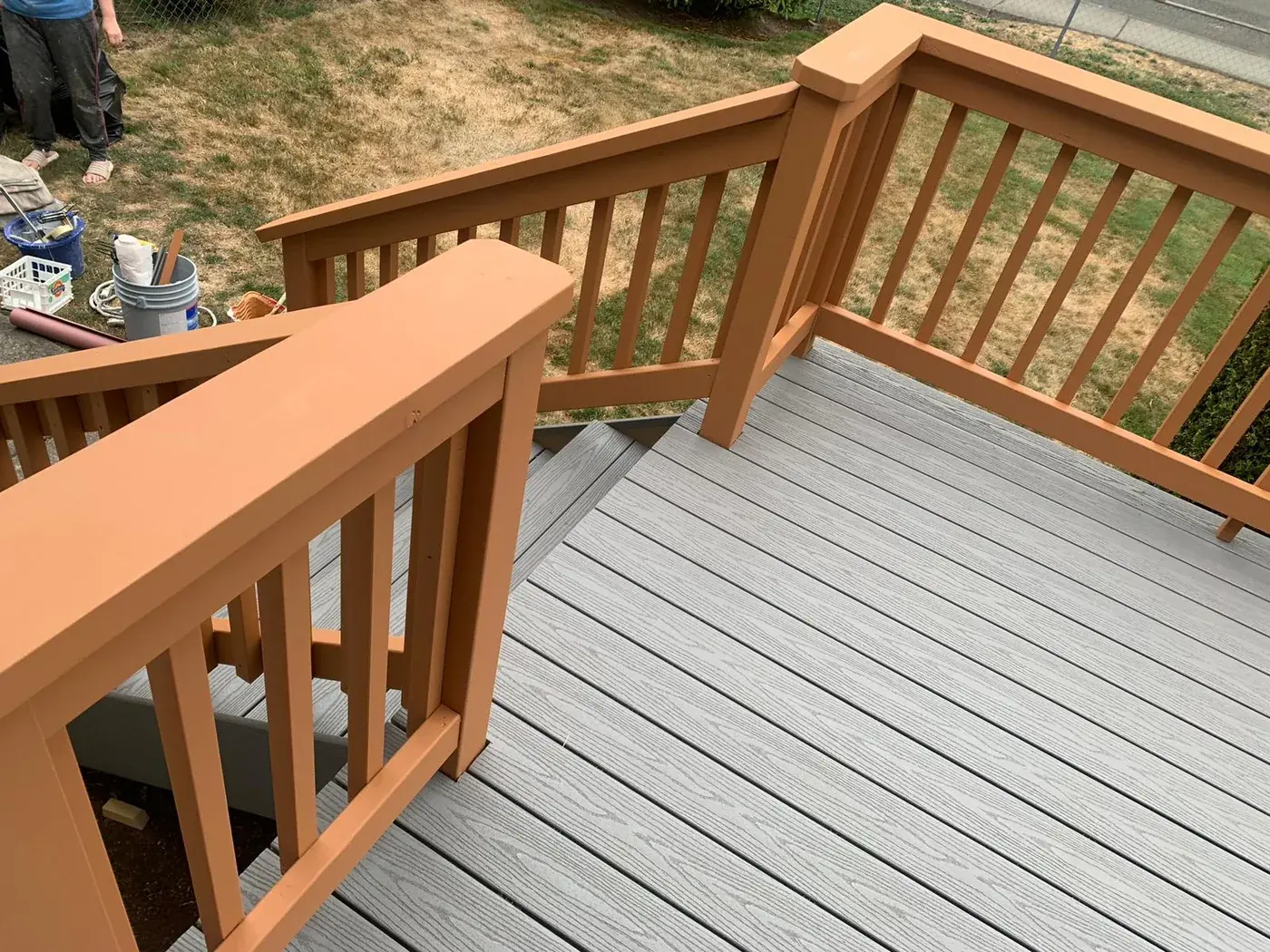
- Rails, steps and posts included — the parts people touch most
Transparent, semi or solid
The more pigment a stain carries, the longer it resists the sun — and the less grain you see. That is the whole trade-off.
Transparent shows the wood beautifully and needs redoing soonest. Semi-transparent is the usual middle ground. Solid lasts longest and looks close to paint. On a deck that has already been solid stained, going back to transparent is effectively impossible — worth knowing before choosing.
New wood needs to wait
Fresh pressure-treated lumber is usually too wet to take stain. It generally needs weeks to months of drying first. Staining it early feels productive and wastes the material.
Penetrating stain or a film-forming finish
The first decision on any fence or deck is whether the finish soaks in or sits on top, and in this climate it changes everything that follows. A penetrating semi-transparent stain gets into the wood, colours it, and wears by fading. When it is time to redo it you clean and reapply. A film-forming solid stain or a deck paint builds a skin on the surface, covers more, and when it fails it fails by peeling, which means scraping and sanding before the next coat.
On horizontal surfaces that hold water and take sun all day, we lean toward penetrating products. A deck board in North Port gets rain, standing water, UV and foot traffic, and a film on top of it has every reason to lift. Fences are more forgiving, and a solid stain on a fence that has already been painted or is badly weathered can be the sensible call.
Colour depth ties into it. The more pigment a stain carries, the more UV protection it gives the wood and the less grain shows. Clear and lightly tinted finishes look beautiful for one season here and then need doing again. We say that up front rather than after.
New pressure treated lumber needs time
Freshly installed pressure treated fence and deck boards arrive wet. The treatment is forced in under pressure and the lumber can hold a lot of water when it is delivered, which is why a new fence sometimes feels heavy and dark. Stain applied onto wood in that state has nowhere to go — it sits on the surface, dries blotchy, and lifts within months.
How long to wait depends on the weather, not the calendar. Some boards are ready in a few weeks of dry season sun; the same fence installed in July can need considerably longer. The honest test is a moisture meter reading, or the low-tech version: sprinkle water on the board, and if it beads and sits, the wood is not ready to take stain.
Mill glaze is the other issue on new lumber, particularly on smooth-faced boards. The milling process burnishes the surface and closes the grain, and a stain that cannot get in will not last. A wash with a wood cleaner and a light sanding or brightening opens it back up. Waiting and prepping properly costs a few weeks; skipping both costs the whole job.
Cleaning wood without destroying the surface
Old wood has to be cleaned before it is stained, and cleaning is where fences get wrecked. Hitting cedar or pressure treated pine with a narrow tip at high pressure carves the soft spring wood out from between the grain lines and leaves a fuzzy, furrowed surface that no stain fixes. The damage is permanent and obvious once the finish goes on.
So the chemistry does the work and the water only rinses. A sodium percarbonate based wood cleaner lifts mildew, algae and greying, sits for its dwell time, and comes off with a wide fan tip at low pressure — generally well under a thousand PSI on soft wood, with the tip kept moving and held back from the board. Tannin-stained and iron-stained boards then get an oxalic acid brightener, which also brings the pH back down before stain goes on.
Then it dries. A fence that was washed in the afternoon is not ready for stain that evening, and in a humid week the wait is longer. See pressure washing for how we handle the harder surfaces around a deck, where the pressure limits are different.
What staining will not fix, and honest lifespans
Stain is a finish, not a repair. Rotted pickets, split rails, posts that rock in the ground and hardware that has rusted through all need replacing first, and we say which boards those are while quoting rather than after the colour is on. We do small board and picket replacement as part of a staining job; we do not build fences, decks or structures, and we do not take on anything load bearing.
Ground contact is the part nobody wants to hear. The bottom few inches of a fence board and the base of a post live in wet soil, get hit by irrigation every other morning, and will go before the rest of the fence does no matter what is brushed on them. The same applies to deck boards sitting directly on a damp slab.
On lifespan, be sceptical of big numbers. A south or west-facing fence panel in Port Charlotte fades faster than the shaded run behind the garage, and a north-facing fence under oaks grows mildew instead. Expect a maintenance coat on a schedule measured in a small number of years, plan for it, and the wood lasts. Treat it as permanent and it will not.
What people ask about deck & fence staining
How often should a deck be restained?
More often than in a cooler climate, and it depends heavily on how much sun the deck takes and which stain type was used. A shaded semi-transparent deck lasts noticeably longer than one in full afternoon sun.
Can you stain a fence as well?
Yes — fences, pergolas, arbors, gates and trellises all get the same treatment. Fences are usually quoted by linear foot and by how many sides.
My deck is already painted. Can it be stained?
Not without stripping, and stripping a deck is a big job with mixed results. Usually the sensible route is to keep it as a painted or solid-stained surface.
Will staining fix splinters and cracks?
No. Stain is a finish, not a repair. We will point out boards that should be replaced, and it is far better to swap them before staining than after.
Our fence went in last month. Can it be stained now?
Probably not yet. New pressure treated lumber holds moisture from the treatment process and stain will not penetrate until it dries down. Sprinkle water on a board: if it beads and sits on top, the wood is not ready.
We are happy to come out, check it with a moisture meter, and give you a realistic window. It is usually weeks rather than days, and a fence installed in the summer rainy season takes longer than one installed in February.
How often will a stained fence need redoing here?
Less often than you would like and more often than the label suggests. UV on the south and west sides, daily irrigation at the base, and summer humidity all shorten the interval, so plan on a maintenance coat every few years rather than a decade.
Penetrating stains help here: because they fade rather than peel, the recoat is a wash and reapply instead of a strip and start over.
Can you stain just our side of a shared fence?
Yes, and it is a common request in deed-restricted communities where the neighbour is not interested. We mask and work to the edge of the pickets on your side. Be aware that the unfinished side will weather differently and the colour difference is visible through the gaps.
If your HOA specifies a fence colour or finish, send us the architectural guidelines and we will quote to them.
Will stain stop the wood going grey?
It slows it down, in proportion to how much pigment the stain carries. Greying is UV breaking down the surface fibres, so a semi-transparent or solid stain with real pigment blocks much more of it than a clear sealer, which in Florida sun buys you about one season.
Nothing stops it permanently. A fence that already went grey can be brought back close to fresh colour with a cleaner and an oxalic brightener before staining.
Deck & Fence Staining near you
We work across Sarasota and Charlotte counties from our base in North Port, and travel south into Lee and Collier counties on request.
Want a price for deck & fence staining?
Send a couple of photos and the address. You get a written fixed quote, usually the same business day.