


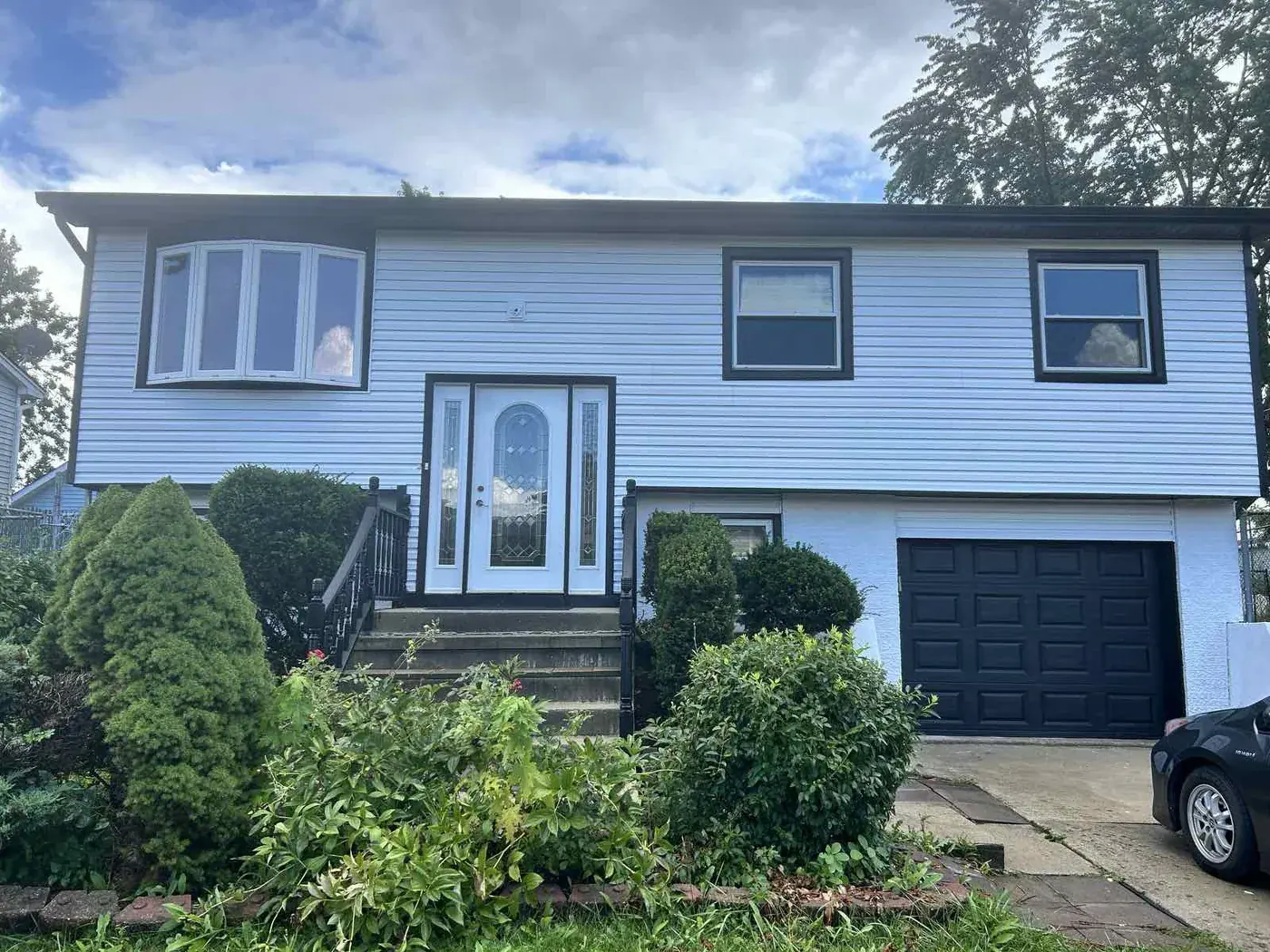
Interior painting that still looks sharp in five years
Walls, ceilings, trim, doors and closets — masked properly, cut in by hand and rolled without spatter on your floors. You get a fixed price before we start and a clean house when we leave.
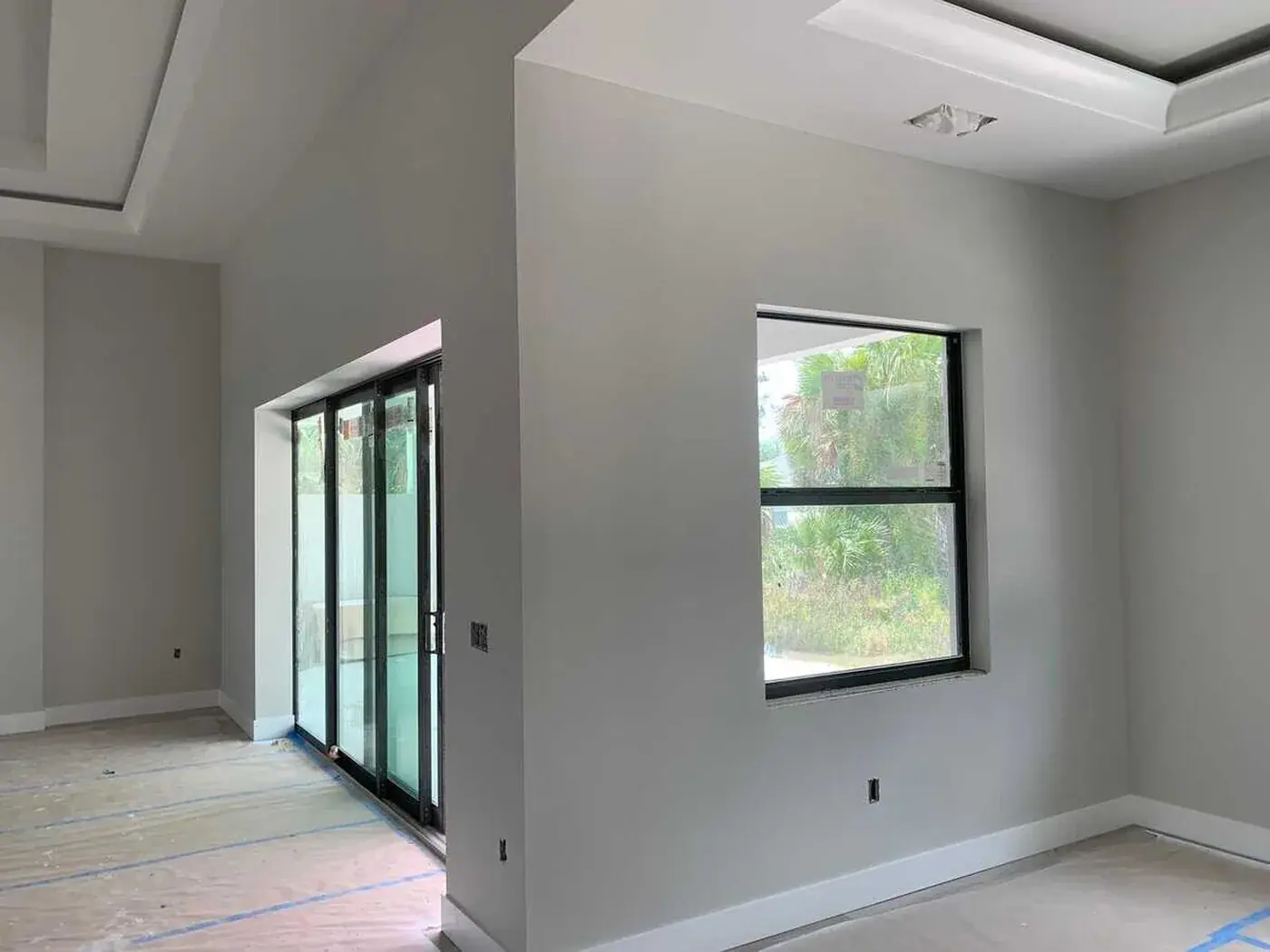
Most interior repaints go wrong in the same two places: preparation and protection. Paint sprayed over dusty drywall lifts within a season. Furniture pushed into the middle of a room and left uncovered picks up a fine mist you only notice in daylight a week later.
We work the other way round. The room gets emptied or covered, floors get protected wall to wall, and every edge that will not be painted gets masked before a single can is opened. Only then does the first coat go on.
What a room includes
- Moving and covering — furniture shifted and wrapped, floors papered or sheeted from baseboard to baseboard
- Patching — nail holes, dings, hairline cracks and old anchor holes filled, sanded and spot primed
- Cutting in by hand — ceiling lines, corners and trim edges cut with a brush, not taped and hoped for
- Two finish coats on walls as standard, more where a dark color is going light
- Trim, doors and closets quoted with the room so nothing is a surprise later
- Daily clean-up — the house stays livable while we are in it
Color: the part people underestimate
A color that looks right on a two-inch chip almost never looks the same on a wall. Florida light is bright and reflective, and a room with a lanai or a pool behind it picks up a green cast in the afternoon that no one predicts.
So we brush large samples on the actual wall, in the actual room, and look at them in morning and evening light before anything is ordered. It costs a day and saves repainting a whole living room.
Living in the house while we paint
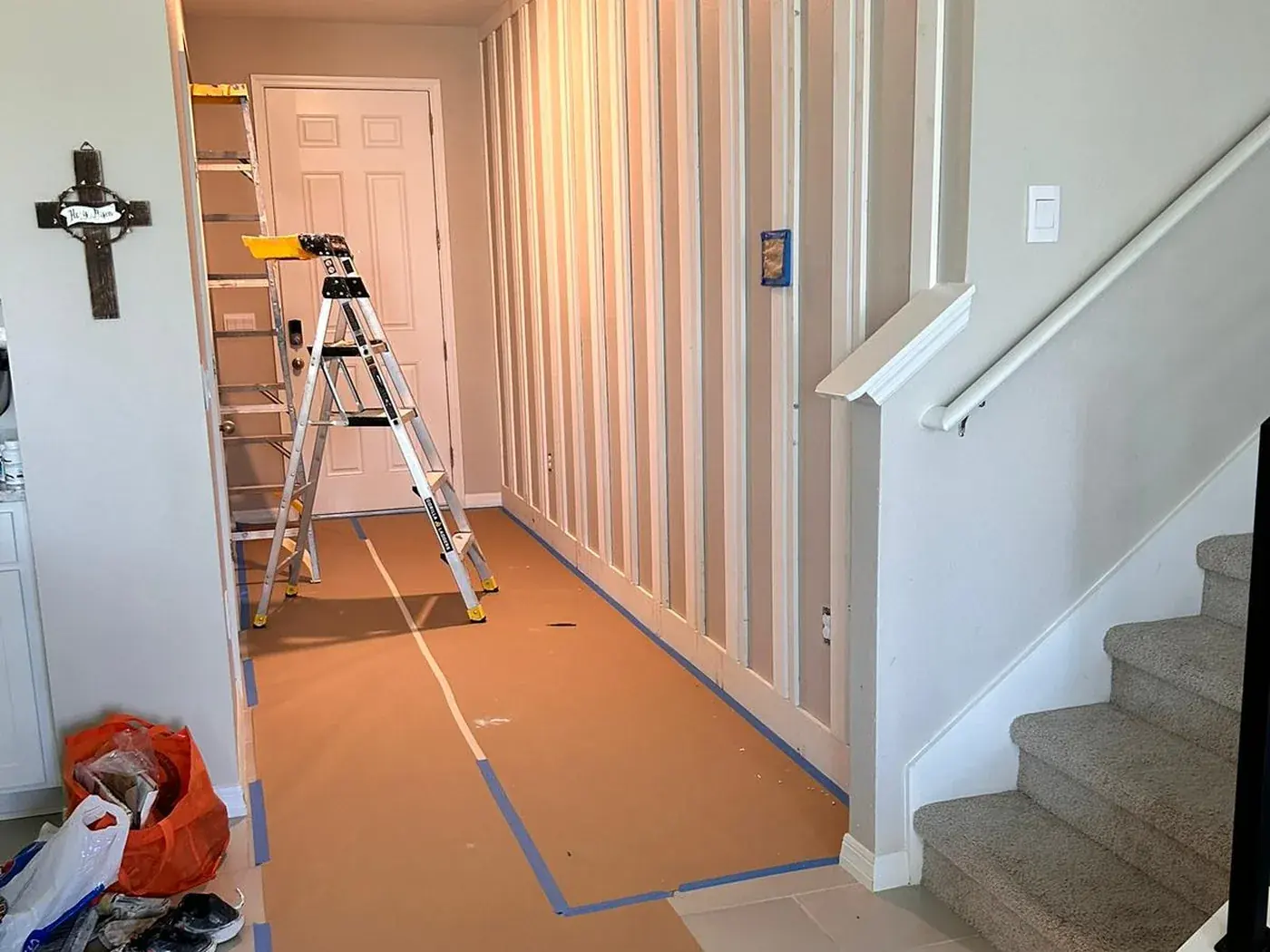
Most interior jobs run room by room so you keep a kitchen, a bathroom and somewhere to sleep. We agree the order before day one, and you always know which rooms are out of use tomorrow.
How an interior repaint runs in an occupied home
Most interior painting in Sarasota, Venice and North Port gets done while the family is still living in the house. Furniture moves to the middle of the room and gets covered, floors get canvas along the walls and paper in the traffic lanes, and switch plates, vent covers and door hardware come off instead of being cut around. Rooms are finished one at a time where the layout allows, so you keep a working kitchen and a bed to sleep in.
Indoor conditions matter more than people expect. Waterborne wall paint wants moving air and a reasonable dew point, so the air conditioning stays on and the windows stay shut. On a wet August week a room that would recoat in three hours can need five. Waiting beats trapping moisture under a second coat, because that is what leaves you with a soft film, visible lap marks and burnish spots six months later.
Seasonal homes are a different job. Plenty of houses between Nokomis and Punta Gorda sit empty from May to October, and a fair number get painted with the owners still up north. That needs an agreed access plan, a thermostat left around 76 to 78, and progress photos, so nobody is approving a colour from memory.
Prep work that decides how the walls look
Drywall in Southwest Florida moves. Screw pops, hairline seam cracks and dinged corner bead show up in almost every house over fifteen years old. Small holes get lightweight compound; a recurring crack over a doorway gets setting compound and tape rather than a smear of filler. Patches are sanded at 120 grit, then knocked back with 150, so the repair does not read through the finished sheen.
Every patch gets spot primed. Bare compound drinks paint at a different rate than the wall around it, and skipping that step is the most common reason a finished wall flashes under lamp light. Gaps where trim meets wall are caulked with a paintable acrylic latex, tooled with a wet finger, and left to skin before anything is rolled across them.
Some things are not a paint problem. Water-stained ceilings, sagging seams, texture patched four times by four different people, or wallpaper that is letting go all get dealt with first — see drywall repair and wallpaper removal. Painting over loose wallpaper looks acceptable for a month, then telegraphs every seam.
Choosing sheens for humid Florida rooms
Ceilings get flat, and there is no good argument for anything else: flat hides roller stipple and the slight waves in a twenty-year-old lid. Living areas and bedrooms usually get eggshell, which cleans up without turning a wall into a mirror for afternoon light bouncing off the pool deck. Trim, doors and casing take satin or semi-gloss so they can actually be wiped down.
Baths, laundry rooms and the wall behind a pool bath do better in satin with a mildew-resistant film. That is not magic. A closed bathroom with no working exhaust fan will grow mildew under the best coating sold, so if the fan is not moving air, fix that before spending money on paint. Sheen manages moisture; it does not defeat it.
On product: Sherwin-Williams ProMar 400 is a contractor line, not a premium paint, and it is the honest pick for ceilings, rental turns and whole-house repaints where colour matters more than scrub rating. Behr Premium Plus, Benjamin Moore and Florida Paints come into the mix when a room needs a tougher film or a deep tint base.
When you should not repaint the interior yet
A brown ring on a ceiling is a message, not a cosmetic defect. Tile roofs in Venice and Osprey leak at valleys and at cracked field tile, and a repainted ceiling over an unfixed leak stains again within a season. Find the source, let the drywall dry out, then the stain gets sealed with a stain-blocking primer and finished.
Textured ceilings sprayed before roughly 1980 may contain asbestos. Those do not get scraped, sanded or aggressively rolled until a sample has been tested by a lab — that is a rule of the job, not a preference. If the result comes back clear, popcorn ceiling removal is straightforward. If it does not, the ceiling stays undisturbed.
Order of operations saves money too. If new flooring, new baseboard or a kitchen change is coming in the next few months, paint after, or at least get walls done before trim goes in. Painting and trim work are what we do — no remodeling, no framing, no drywall installation — so you will be told plainly when another trade needs to go first.
What people ask about interior painting
How long does a typical interior repaint take?
A single room is usually a day. A three-bedroom home with walls, ceilings and trim is more often three to five working days, depending on how much patching and how many color changes are involved. You get the schedule with the quote, not after we start.
Do I need to move the furniture myself?
No. We move what can be moved and wrap what cannot. If you would rather empty a room yourself, that is fine too — it speeds things up and we will say so in the quote.
Will the paint smell?
Modern low-VOC interior paints are mild, and we keep air moving while we work. Most people are comfortable in a finished room the same evening.
Can you match a color that is already on the wall?
Usually yes. A clean chip from an inconspicuous spot goes to the paint store for a scan. Matching is very close but never perfect, which is why we prefer to repaint a full wall rather than touch up the middle of one.
Does the air conditioning need to stay on while you paint?
Yes, and set it near 76 degrees. The AC is what pulls humidity out of the room, and dry and recoat times on waterborne paint depend on that more than on air temperature. With the system off in July, a coat that should be ready in three hours can still be soft at dinner time. If the unit is down or being replaced, say so before the start date so the schedule can shift.
Will the paint smell linger in a closed-up house?
Modern waterborne interior paints are low odour, and in a house with the AC running most people stop noticing it within a day. Bedrooms are timed so they are not the last thing sprayed or rolled before bedtime. If someone in the house is sensitive to smells, tell us at the estimate and the sequence can be planned around the rooms they use, with a filter change afterwards.
Do you paint over knockdown texture or smooth it out first?
Knockdown and orange peel get painted as they are; that is what the texture is for. Smoothing a textured wall is a skim-coat job, done in stages with sanding between, and it costs considerably more than the painting — see drywall repair. It is worth doing on one feature wall or a modern remodel. Doing it to a whole house rarely pays for itself.
Why did my last repaint end up looking patchy in certain light?
Usually one of three things: patches that were never spot primed, one coat over a colour change, or a wall cut in with a brush and rolled with a heavy nap so the sheen sits differently at the edges. Deep reds, dark blues and strong yellows are the worst offenders and often need a tinted primer plus two finish coats to sit evenly.
Interior Painting near you
We work across Sarasota and Charlotte counties from our base in North Port, and travel south into Lee and Collier counties on request.
Want a price for interior painting?
Send a couple of photos and the address. You get a written fixed quote, usually the same business day.