


Kitchen cabinet painting, for a fraction of new cabinets
If the boxes are solid and the layout works, replacing cabinets is usually the most expensive way to solve a problem that is really about color and finish. Refinishing costs a fraction and takes days, not weeks.
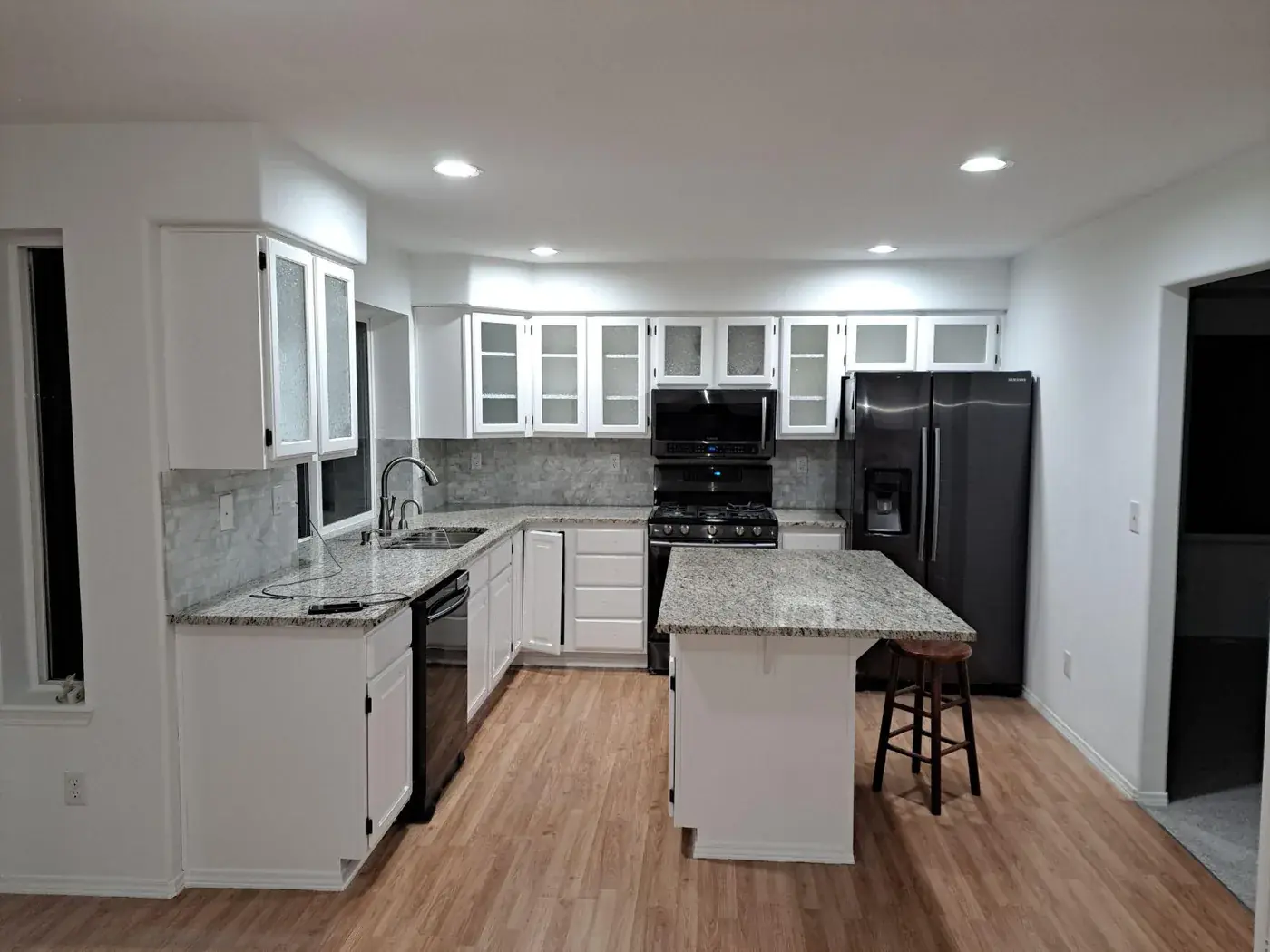
Kitchen cabinets are the hardest painted surface in a house. They get touched constantly, wiped with cleaners, splashed with cooking grease and opened a thousand times a year. A wall coating brushed onto a cabinet door will not survive that, no matter how carefully it goes on.
Cabinets need degreasing, scuff sanding, a bonding primer made for slick surfaces and a hard cabinet-grade topcoat — sprayed, not brushed, so there is no texture to catch dirt.
How the job runs
- Doors and drawer fronts come off and get numbered so every one goes back where it came from
- Degrease, then sand — years of cooking film removed before anything is abraded
- Bonding primer made for laminate, thermofoil and factory-finished wood
- Sprayed topcoats in a controlled setup, so the finish is even and hard rather than brush textured
- Boxes and face frames prepped and finished in place with the kitchen masked off
- Rehang and adjust — hinges reset so doors sit level and close properly
What refinishing cannot fix
Worth saying plainly: paint changes color and finish. It does not change shape. If a door is swollen at the bottom from a dishwasher leak, if the boxes are delaminating, or if you dislike the layout, refinishing will not solve it.
We will tell you that at the estimate rather than after. If the cabinets are sound, you get a kitchen that looks new for a small share of what replacement costs.
Can we use the kitchen?
Mostly yes. Doors are off site while the boxes are being done, so you have open shelves for a few days. The sink, the stove and the refrigerator stay in service throughout.
How we paint kitchen cabinets without wrecking your week
Kitchen cabinet painting in Venice FL and North Port runs as a fixed sequence, and the sequence is what makes it last. Doors and drawer fronts come off and get numbered to their openings. Hinges and pulls go into labelled bags. Boxes stay in place, with countertops, backsplash, appliances and floor covered and the kitchen sealed off from the rest of the house so dust does not travel.
Degreasing is most of the work in a kitchen that gets cooked in. Years of aerosolised oil sit on the rails and stiles either side of the range, and nothing bonds through it. Surfaces are cleaned, rinsed and dried, then scuff-sanded at 220 grit until the old sheen is dead flat, dusted and wiped with a tack rag. A bonding primer follows and gets a light sand of its own.
Finish coats are sprayed rather than rolled. Doors are sprayed flat on racks, backs first, and the boxes are sprayed in place with tight corners brushed where a gun cannot safely reach. You end up with a hard, level surface and no stipple. Plan on the kitchen being out of normal service for several days, and sort out meals before the start date.
Cabinet doors that will not take paint well
Not every kitchen is a candidate, and you should know that before spending anything. Thermofoil doors — the white ones with a vinyl skin heat-pressed onto MDF — lift at the corners nearest the dishwasher and oven, and coating a door whose skin is already peeling is money spent on a problem that comes back. Flat melamine and printed laminate can sometimes be bonded, but never under a standard wall primer, and the edges stay the weak point.
Open-grain oak is a separate conversation. The grain still reads through paint, so a smooth modern look means grain filling, more sanding and more coats, which moves the price far enough that new doors deserve a look first. Some people like seeing the grain under a painted finish. That is a fine outcome, as long as it was chosen rather than discovered.
Maple, birch, poplar, painted MDF shaker doors and most raised-panel wood fronts spray beautifully. Water damage at a sink base, a swollen bottom rail or a door that no longer hangs square gets repaired or replaced before finishing. Old hardware holes can be filled and redrilled if you are switching to different pulls, and that is worth deciding at the estimate.
Curing, handling and living with sprayed cabinets
Dry and cured are not the same. A waterborne cabinet coating is dry to the touch within an hour or two and can be handled carefully the next day, but it keeps hardening for two to three weeks. During that window, do not stack plates hard against the inside of a door, do not lay rubber shelf liner on fresh surfaces, and leave the doors slightly ajar for the first few nights rather than closing them onto green edges.
Sheen is worth a minute of thought. Satin on doors and drawer fronts hides fingerprints and wipes clean. Semi-gloss looks crisper and shows every ridge in the wood beneath it. Box interiors are commonly left as they are, which keeps drawer glides and shelf pins working properly; if you want them coated, ask at the estimate, because it adds real days.
Cleaning afterwards is mild soap and water — not degreaser sprays or abrasive sponges, which cut through sheen on a painted door faster than anything else in the house. Labelled touch-up paint gets left with you. A hinge area that fails in the first year is workmanship and gets fixed; a chip from a dropped cast-iron pan is not, and you will simply be shown how to fill it.
When painting cabinets beats replacing the kitchen
The case for painting is simple: the boxes are usually fine. If the carcases are solid, the layout works and the doors hang true, refinishing what you actually see costs a fraction of new cabinetry and takes days instead of weeks, with no demolition, no countertop removal and no plumbing disconnect. See pricing for how a kitchen gets measured and quoted.
The case against is just as simple. If you want deeper drawers, a moved island, soft-close on everything or a wall opened up, paint does not get you there, and that work is not offered here — no cabinet construction, no remodeling. In that situation the honest answer is to put the money into cabinetry and have it finished later, or buy it prefinished.
For pre-listing sales in Punta Gorda and Port Charlotte, painted fronts and new pulls read as an updated kitchen in photographs, which is usually the entire point. Keep it in the same neutral family as the interior painting and the kitchen stops being the room buyers comment on during a showing.
What people ask about kitchen cabinet painting
How long are the cabinets out of action?
An average kitchen runs a few working days. The doors need proper cure time between coats and that is not a step worth rushing — a cabinet finish that is hurried shows fingerprints for years.
Can you paint laminate or thermofoil cabinets?
Laminate, yes, with the right bonding primer. Thermofoil depends on condition: if the film is peeling away from the substrate, paint will not hold it down. We check that before quoting.
Will the grain still show?
On oak, yes, unless it is grain filled first — which we can do and will price separately. On maple, poplar and most factory finishes the result is smooth.
Do you change hardware?
We can fit hardware you have chosen, and if the new handles use different hole spacing we fill and redrill. Bring the hardware to the estimate if you already have it.
How do you keep overspray out of the rest of the house?
The kitchen is masked as a contained space: plastic from ceiling to floor at the openings, covered counters and appliances, floor protection, and returns taped off so the air handler is not pulling atomised paint through the ducts. Doors are sprayed away from living areas. It is careful work rather than a guarantee, which is exactly why the containment goes up before the sprayer comes out.
Are the doors sprayed here or taken somewhere else?
Both arrangements work. Spraying on site in a garage or a screened area keeps the job short and the doors in your possession, and it is normally fine outside the wettest part of the day. Spraying off site gives more control over dust and humidity but adds handling and transport. Whichever is used, the doors come back to the openings they were numbered from.
Will painted cabinets survive around the sink and dishwasher?
Those are the two spots that fail first, so they get extra attention: full degreasing, proper bonding primer and finish worked into the edges rather than left thin. One habit helps more than any product — do not crack the dishwasher door open the moment a cycle ends. That blast of steam hits the face frame and the door edge above it, and over years it is what lifts a finish.
Can you match the cabinet colour to my trim or countertop?
Close matching is realistic with a physical sample to work from, but understand what changes. The same white reads differently in a sprayed cabinet finish than in a satin on trim, and differently again under warm LED strips versus daylight from a lanai slider. Brushouts on a door and a length of trim, looked at in your own kitchen at night and at noon, settle it faster than any fan deck.
Kitchen Cabinet Painting near you
We work across Sarasota and Charlotte counties from our base in North Port, and travel south into Lee and Collier counties on request.
Want a price for kitchen cabinet painting?
Send a couple of photos and the address. You get a written fixed quote, usually the same business day.