
Elastomeric vs. Acrylic Paint for Stucco in Florida
One is a thick, stretchy membrane, the other a breathable paint film. Both have a place on Florida block homes — the wall decides which.
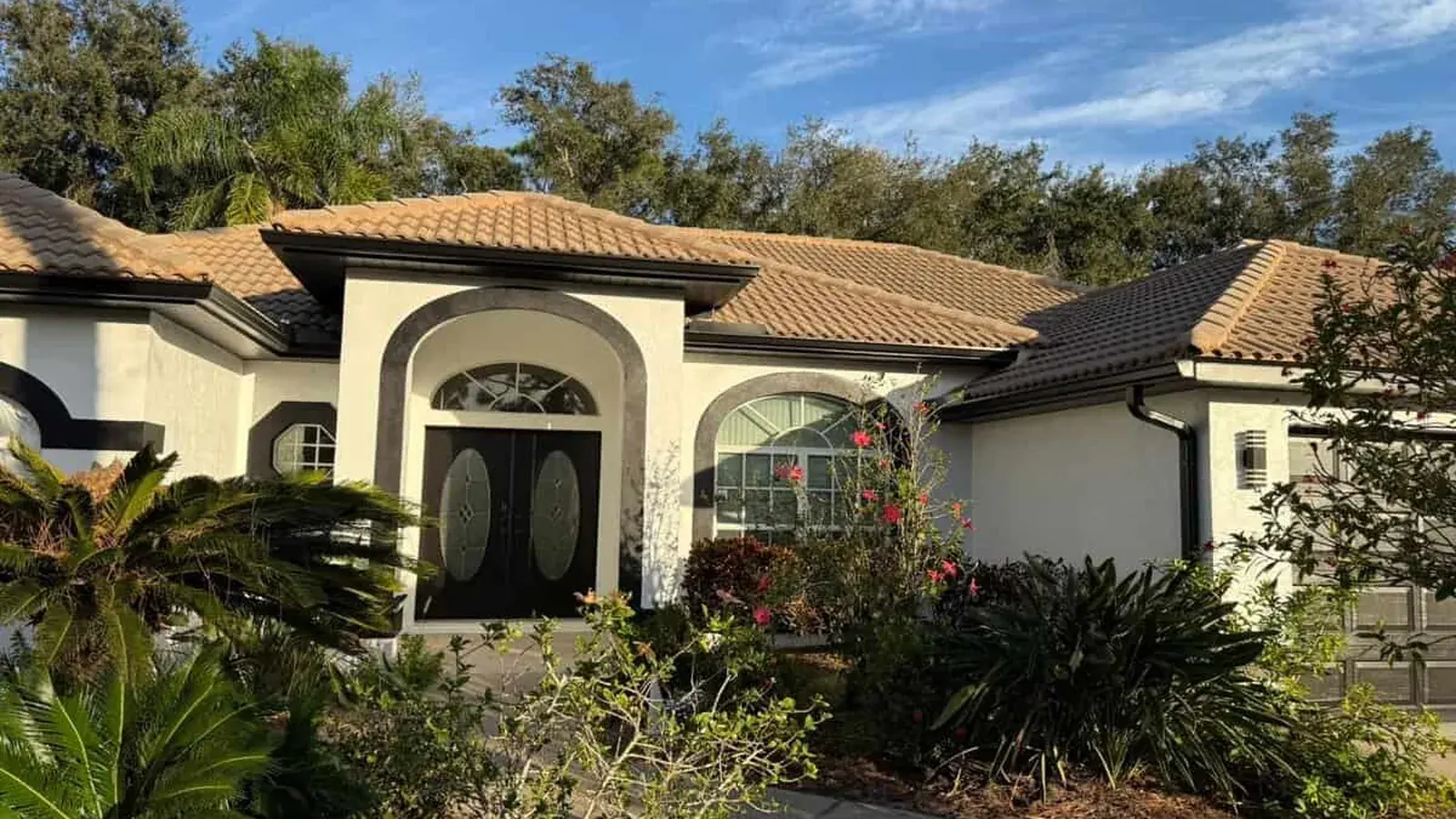
For most sound stucco in Florida, a quality 100% acrylic exterior paint is the right choice: it breathes, recoats easily, comes in every sheen and costs less. Elastomeric coating makes sense on a different kind of wall — one with widespread hairline cracking, no moisture getting in from behind, and an owner willing to pay more for a thicker, crack-bridging film. Elastomeric is not an upgrade in every case. On a wall with a moisture problem, it can make things worse.
What each coating actually is
Acrylic exterior paint
Standard exterior house paint for masonry is made with an acrylic binder that forms a relatively thin, flexible film. It sheds rain from the face of the wall while still letting water vapor escape from the block and stucco behind it. It handles normal thermal movement but does not stretch enough to span a crack that opens and closes with the seasons.
Elastomeric coating
Elastomeric is also acrylic-based, but formulated to be applied far thicker and to stretch and recover like a rubber membrane. Applied at the heavy coverage rate the manufacturer specifies, it can bridge hairline cracks and keep wind-driven rain out of them. The price for that is a much tighter film that lets less vapor through, and a lot more material per square foot.
Elastomeric vs. acrylic at a glance
| Acrylic exterior paint | Elastomeric coating | |
|---|---|---|
| Film thickness | Thin, standard paint film | Several times thicker when applied correctly |
| Hairline cracks | Covers them; they usually reappear | Bridges fine cracks and stretches with movement |
| Breathability | Lets moisture vapor escape | Much lower; can hold water in a wet wall |
| Coverage per gallon | Normal exterior coverage | Far lower; more gallons per wall |
| Sheen and color choice | Full range | More limited, mostly flat and low sheen |
| Dirt pickup | Low | Some products stay slightly soft in heat and collect dirt |
| Future repaints | Simple to recoat | Needs compatible products later |
| Cost | Lower | Higher in material and labor |
When elastomeric is the right call
Elastomeric earns its keep on a specific type of Florida wall:
- Lots of fine cracking — a map of hairline cracks across large areas of stucco, the kind that comes from years of heating and cooling
- A dry wall behind it — no active leaks at windows, doors or penetrations, no efflorescence, no soft stucco
- Wind-driven rain exposure — walls that take storms head on, where water gets pushed into cracks
- A long-term owner — someone staying in the house for years who values fewer visible cracks over a lower price
On those walls, cracks are still repaired first: wider ones get opened and patched, finer ones get a brushed elastomeric patching compound before the full coat. Elastomeric bridges hairlines. It does not fill real gaps on its own.
When acrylic is the smarter choice
Acrylic is usually the better fit when the stucco is in reasonable shape, when cracks are few and isolated, or when moisture is a question mark. It also suits homes where the owner wants a satin finish, a deep color or easy touch-ups later. Many well-maintained homes from Port Charlotte to Naples have never needed anything more than a quality acrylic over good prep — that is the default for our exterior painting quotes.
Acrylic is also the safer choice on walls that will be touched up often, like the lower part of a wall behind landscaping, since it blends and recoats more predictably.
The moisture problem elastomeric can make worse
Water gets into a Florida block house at failed window and door seals, at penetrations, around lanai attachments and through cracks wider than a hairline. Sprinklers hitting the wall every morning and mulch piled over the bottom of the stucco add more. That water normally leaves the wall as vapor through the paint.
Put a tight elastomeric film over a wall like that and the water has nowhere to go. It collects behind the coating, and the result is blisters, bubbles and sheets of coating peeling away, often within a year or two. White efflorescence pushing through the paint is another sign that moisture is moving through the wall.
Fix the water first
Before any coating, the source of moisture has to be found and stopped. Sprinkler heads can be redirected and mulch pulled back. Leaking windows, roofs or failed stucco systems need the right contractor — we point them out rather than paint over them.
Applying elastomeric the right way
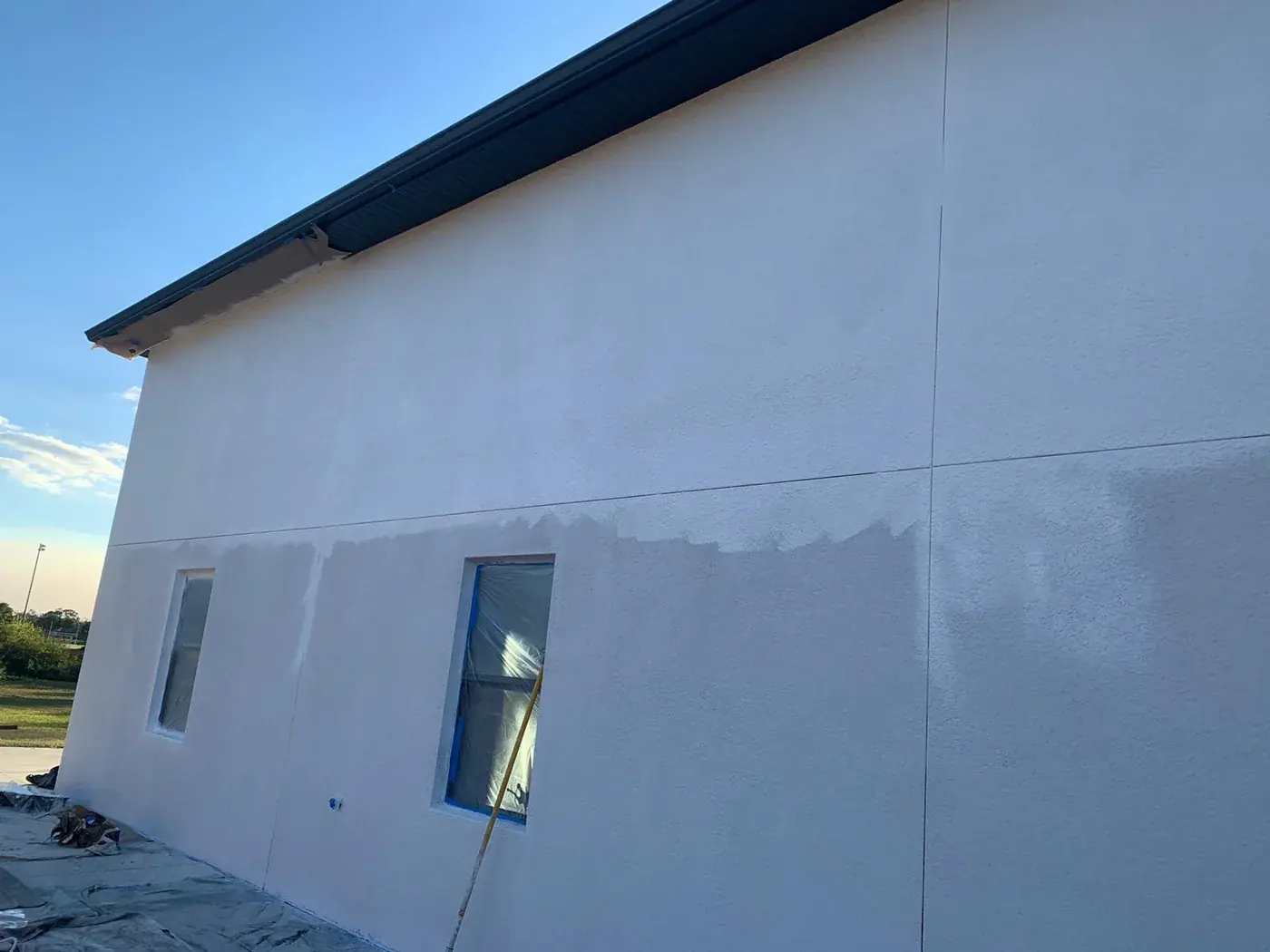
Elastomeric only performs at the film thickness it was designed for. That means far fewer square feet per gallon than ordinary paint, usually two heavy coats, and back-rolling so the coating is pushed into the stucco texture instead of bridging over the peaks. A job that spreads elastomeric as thin as normal paint costs more than acrylic and delivers less. It also needs a dry wall, a warm surface and longer drying time between coats, which in the rainy season means even more careful scheduling. Ask any painter quoting elastomeric how many gallons the job includes; the number tells you a lot.
Switching from elastomeric back to acrylic
If your house already has an elastomeric coating, the next repaint is more limited. Standard paint can be applied over sound elastomeric in many cases, but it has to be compatible and it will not stretch the same way, so cracks may start showing through again. Removing elastomeric to return to a breathable system is a major job. That is one more reason to choose it deliberately rather than by default.
How we decide for your house
We look at the wall before recommending either. That means checking how many cracks there are and where, how wide they are, whether there is staining, efflorescence or soft stucco, what the existing coating is, and how much sun and rain each elevation takes. It is common for the answer to differ by elevation: elastomeric on a cracked, storm-facing side and acrylic on the sheltered ones.
When both are genuine options, your quote shows both, so you can compare. Elastomeric typically adds a noticeable share to an exterior job; the pricing page shows the usual difference. For how cracks, texture and primers are handled, see stucco and brick painting, and for the washing that comes first, pressure washing and soft wash. If you are still choosing a product line, our guide to exterior paint for Florida stucco covers what to look for. Many older block homes around Port Charlotte are exactly where this decision comes up.
Elastomeric and acrylic questions
Is elastomeric waterproof?
It is very good at keeping rain out of the face of the wall and out of fine cracks. It does not stop water that enters from windows, roofs or the ground, and it can hold that water in.
Will elastomeric stop my stucco from cracking?
No. The stucco keeps moving and cracking underneath. Elastomeric stretches over fine cracks so they stay hidden longer. Wide or recurring structural cracks need to be looked at by the right professional.
Can elastomeric be used on wood trim?
It is not a good fit for wood trim and fascia. Wood needs a primer and a standard exterior paint that let it release moisture. Elastomeric is for masonry.
How can I tell if my house already has elastomeric?
Elastomeric feels thicker and slightly rubbery, and a scraped edge is noticeably heavier than normal paint. Old records or HOA files may also list the product. We check during the estimate.
Painting advice for Florida homes
 Stucco
Paint for Stucco
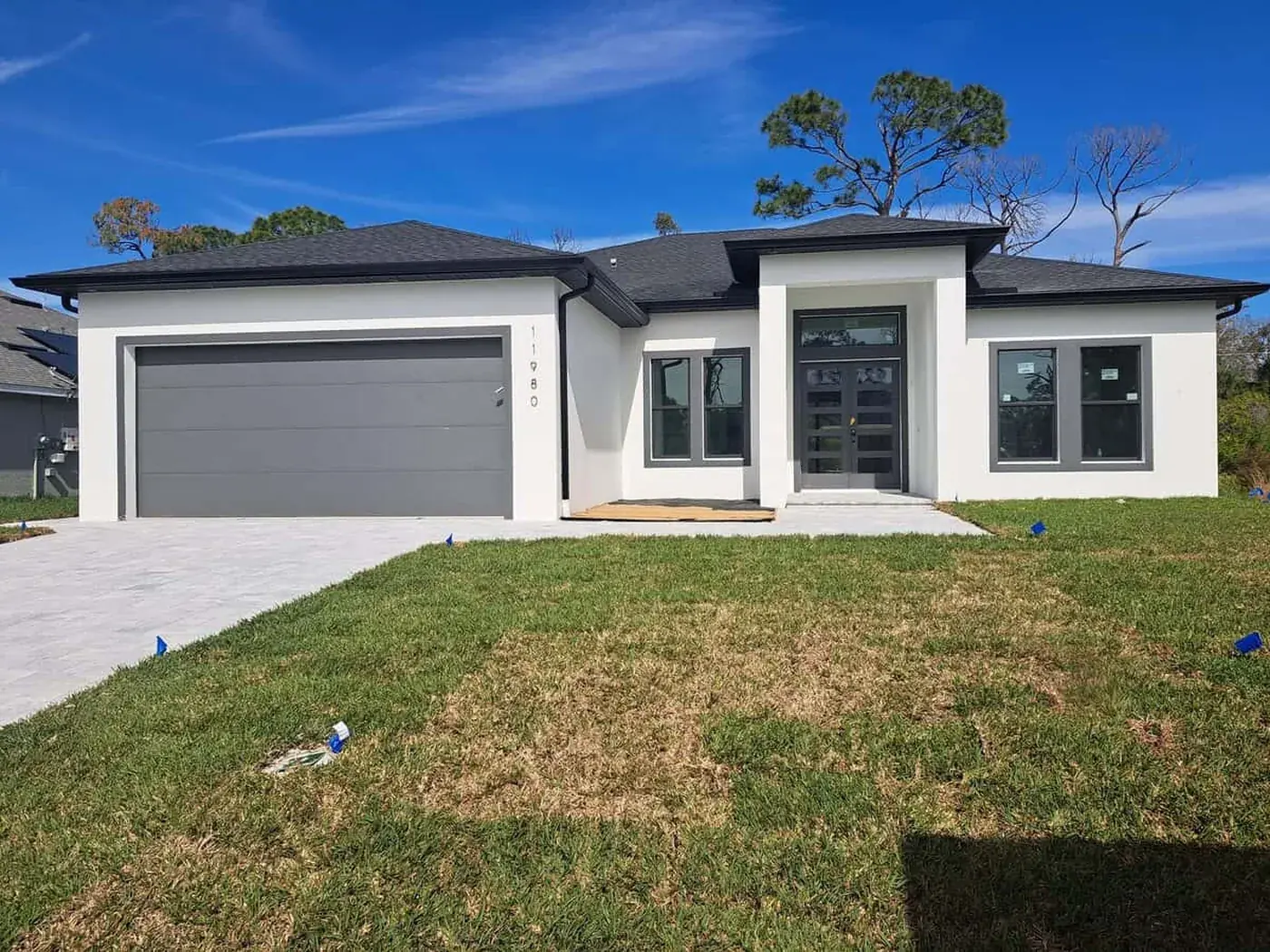
For most Florida stucco, a quality 100% acrylic exterior paint over a clean, primed wall is the right call. Here is what to check before choosing a product.
 Paint & Products
Choosing Exterior Paint
Selecting the right exterior paint is essential for Florida homes. Discover how to balance durability and cost when choosing products for your stucco exterior.
 Interior
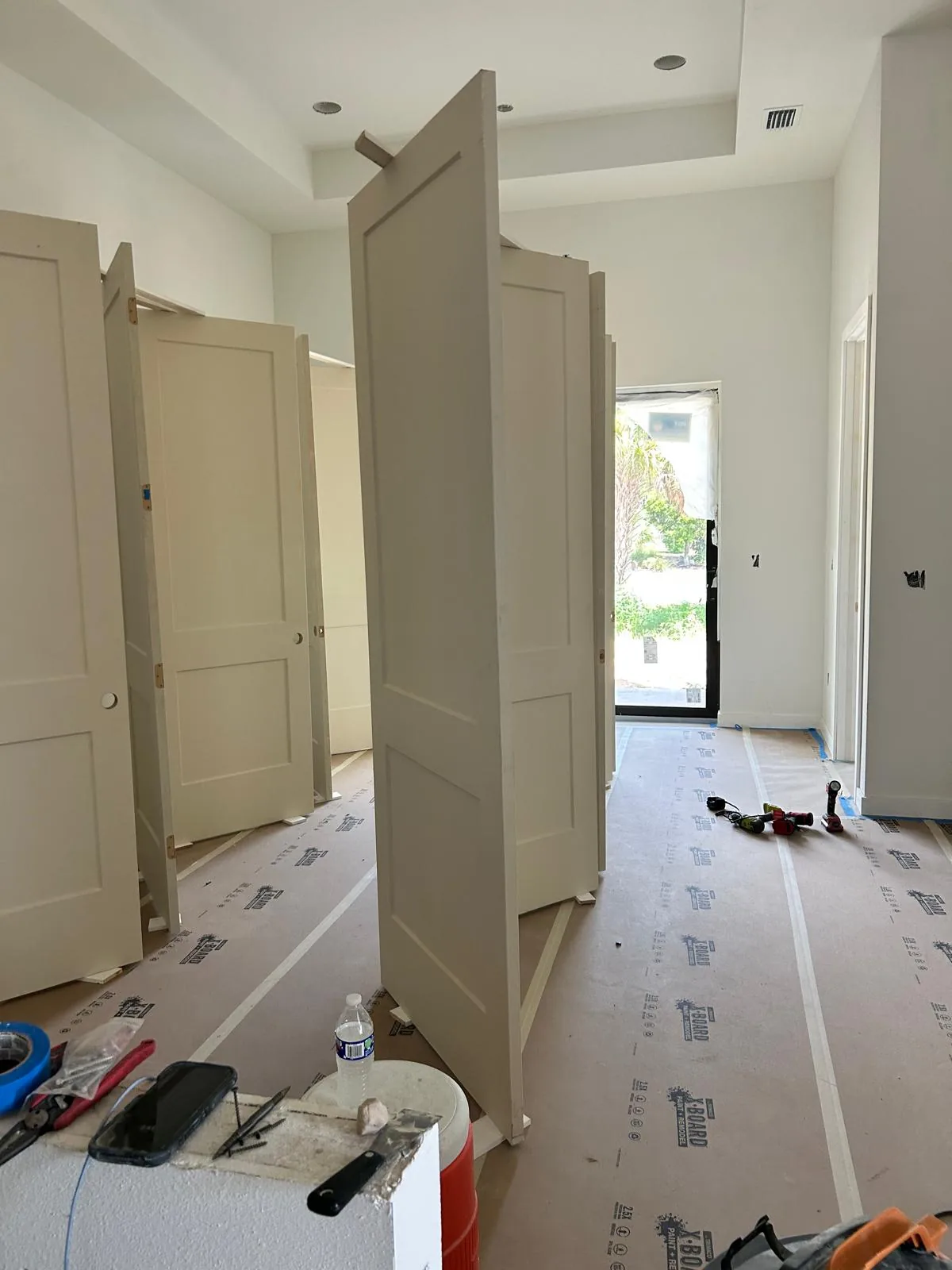
Painting Interior Doors
Painting interior doors is a high-impact project that transforms a room. Discover why professional preparation and spraying are the keys to a factory-like finish.
 HOA
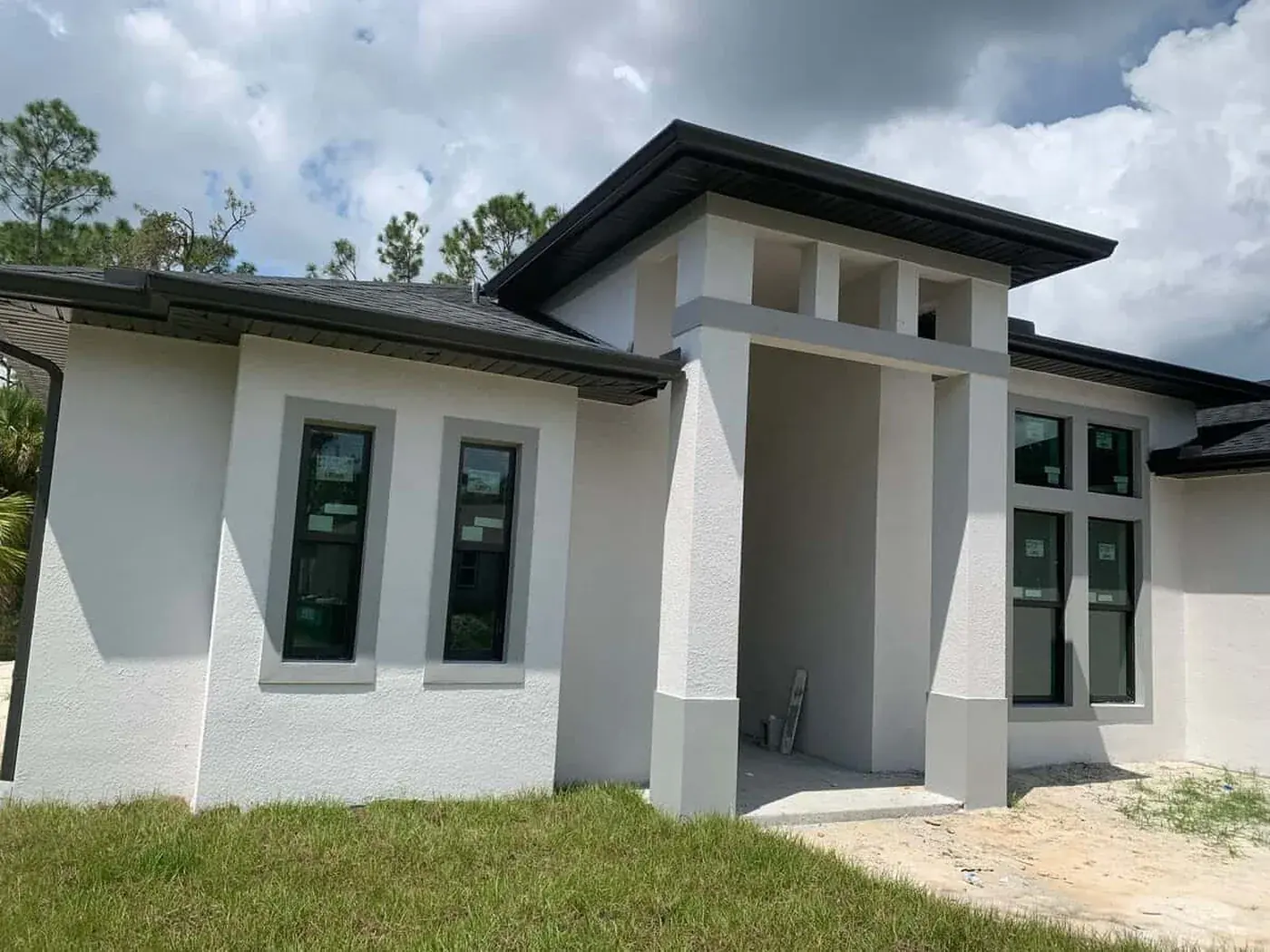
HOA Color Approval
Most Florida HOAs need written ARC approval before you change, or even refresh, exterior colors. Here is what to submit and how to avoid delays.
Not sure which coating your walls need?
Send photos of the cracked areas. We look at the wall and quote the option that fits it — or both, when both make sense.