
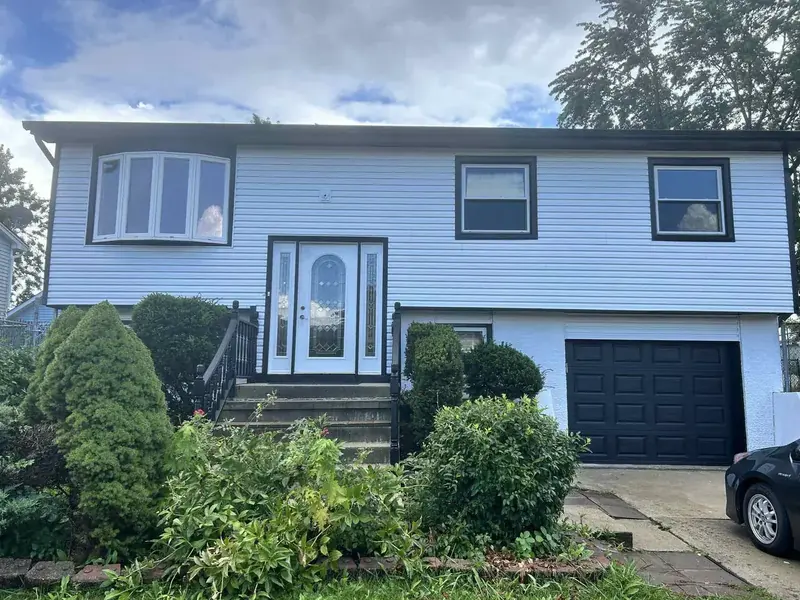
Choosing Exterior Paint for Florida Stucco: What Actually Matters
The brand on the can gets the attention, but resin, breathability, primer and how the paint goes on decide how long a stucco wall stays good-looking in this climate.
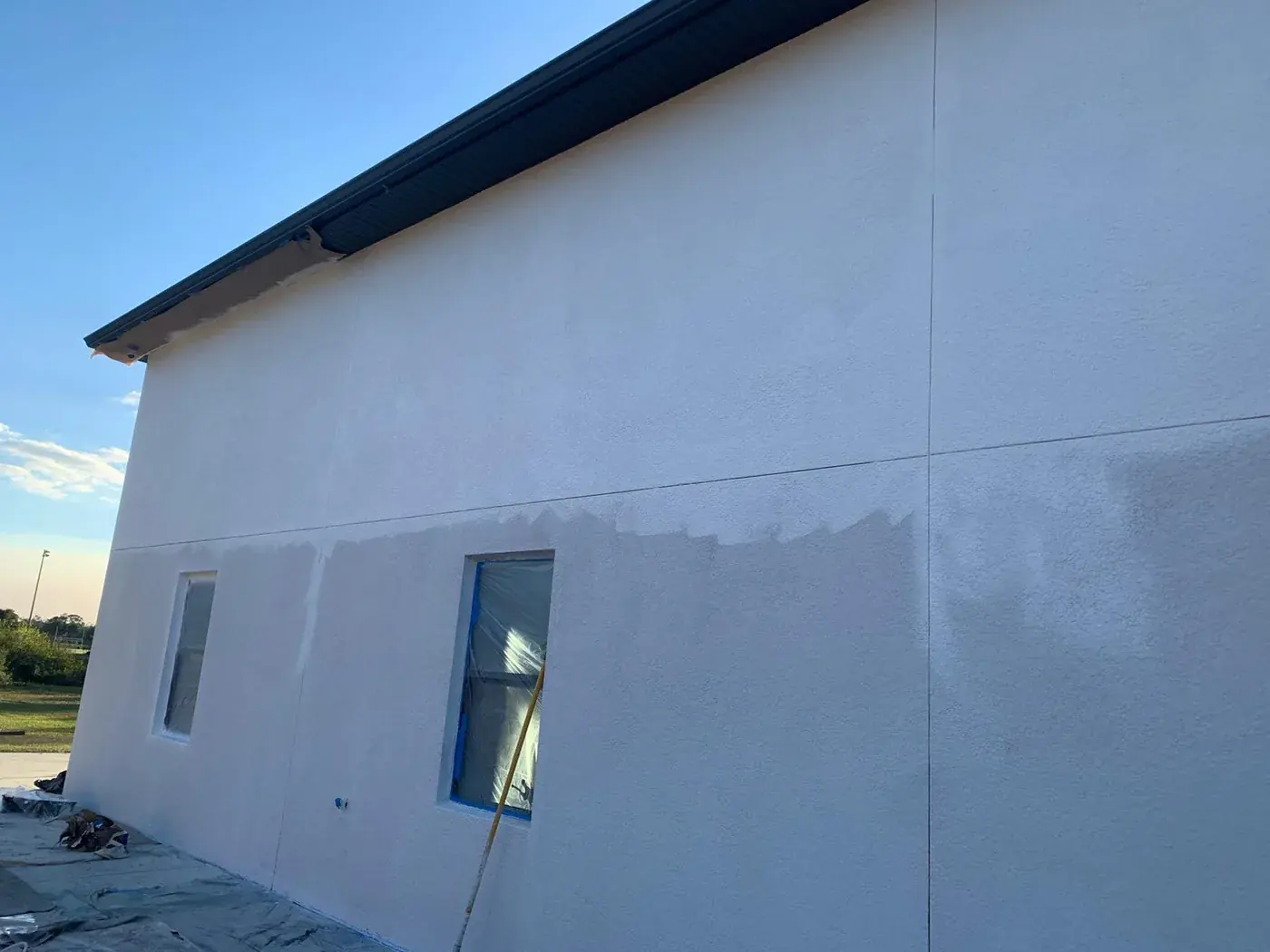
For most Florida stucco homes, the right exterior paint is a quality 100% acrylic exterior paint, applied in two coats over a wall that has been washed, repaired and primed where needed. On stucco with widespread hairline cracking and a dry wall behind it, an elastomeric coating can be the better fit. Beyond that, what matters is less the brand than the details: the resin, how well the film breathes, mildew resistance, sheen, color and the primer underneath. Every major brand sells products at several quality levels, and the product line you pick matters more than the name on the label.
What Florida stucco asks of exterior paint
Stucco over concrete block is porous, alkaline and textured. It soaks up water during summer storms and has to release it again, and it expands and contracts with surface temperatures that can swing dramatically between dawn and mid-afternoon. A paint for this surface has to stick to a rough, mineral face, let moisture vapor escape, flex with small movements and stand up to strong UV for years. Siding paints and interior products are not built for that combination.
Homes near the coast
On barrier islands, canal lots and anywhere within sight of the Gulf, salt film settles on the walls between rains. It attracts moisture and weakens adhesion if it is painted over. For those houses the product matters a little less and the washing a lot more: a thorough rinse right before priming, and a repaint schedule that does not wait until the film is fully worn through.
What to look for when you choose exterior paint for stucco
| Feature | Why it matters on Florida stucco |
|---|---|
| 100% acrylic binder | Acrylic resins hold color and resist UV breakdown better than vinyl-acrylic blends, which tend to chalk sooner in strong sun. |
| Rated for masonry or stucco | The label or technical data sheet should list masonry, stucco or concrete block as a suitable surface. |
| Breathability | Block and stucco hold moisture. A film that lets vapor out avoids blistering and peeling from behind. |
| Mildew resistance in the film | Exterior paints with mildewcide in the coating slow regrowth on shaded and damp walls. Washing still comes first. |
| Alkali tolerance | Fresh and patched stucco is alkaline. The primer and paint have to tolerate that, or color shifts and adhesion suffers. |
| Stated coverage | Textured stucco takes more paint than smooth siding. A product only performs at the coverage rate the manufacturer states. |
The technical data sheet, which manufacturers publish for every product, is more useful than the marketing on the can. It lists the resin type, recommended surfaces, coverage, recoat time and minimum application temperature.
Acrylic or elastomeric?
This is the most common question about stucco paint, and the honest answer is "it depends on the wall." Standard acrylic exterior paint breathes better, recoats easily and costs less. Elastomeric goes on much thicker, stretches and bridges hairline cracks, but it can trap moisture if water is getting into the wall. We cover the trade-offs in detail in elastomeric vs. acrylic paint for stucco.
Sheen: flat, low sheen or satin
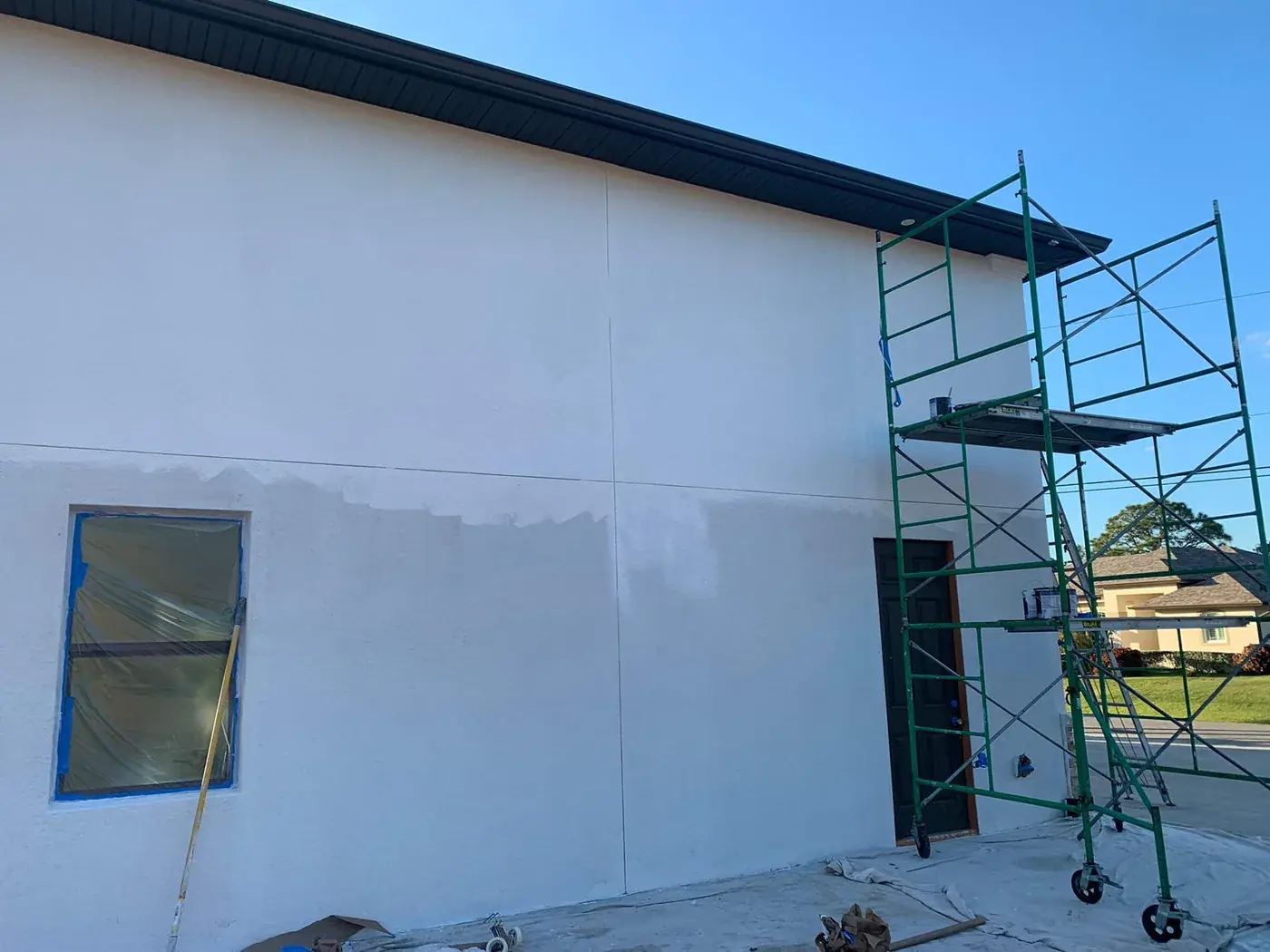
Most stucco bodies in Southwest Florida are painted in a flat or low-sheen finish. Flat hides the uneven texture and small repairs most effectively, which matters on stucco where patches are hard to make disappear. Low sheen and satin are a little easier to clean and shed dirt and mildew slightly better, but they show texture changes and lap marks more in raking light. Trim, doors and fascia usually get a satin or semi-gloss for contrast and durability — see doors, trim and millwork painting.
Many HOAs specify the sheen along with the color, so check your community guidelines before choosing.
Color and heat
Color affects more than looks in Florida. Dark colors absorb more heat, which makes the wall surface hotter and works both the coating and the stucco harder. They also fade faster under strong UV. Manufacturers publish a light reflectance value (LRV) for each color; a higher number reflects more light and heat. Light and mid-tone colors are the practical choice for the body of a stucco house, with darker shades saved for doors, shutters and accents.
Very bright whites can look harsh in full Florida sun. A slightly warmer or softer white is often easier on the eye and still keeps the house cool.
Primer is part of the system
Paint is only as good as what it sits on. Three situations call for primer on stucco:
- New or patched stucco — needs about 28 days to cure, then a masonry primer made for alkaline surfaces
- Chalky old paint — after washing, a masonry conditioner or adhesion primer binds the remaining chalk so the new coat holds
- Stains — rust from well-water irrigation and water marks need a stain-blocking primer, or they bleed through the topcoat
Sound, previously painted stucco in good shape often needs only spot priming of repairs. That decision is made wall by wall, not by default.
The brands we use and how we choose
We work with Sherwin-Williams, Behr Premium Plus, Benjamin Moore and Florida Paints. All four offer exterior products suited to masonry, and each has lines at different price and quality levels. We do not rank them against each other, because the answer changes with the house: the condition of the existing coating, the exposure of each wall, the color you have picked, what your HOA requires and your budget.
What we do is choose a specific product line for your wall, read its data sheet, and apply it the way the manufacturer intends. If you already have a brand or color in mind, or your community requires a particular manufacturer, we work with that.
What matters more than the can
A premium paint over a dirty, chalky wall will fail sooner than a mid-range paint over a well-prepared one. On Florida stucco, a lasting job usually includes:
- A full soft wash to remove chalk, mildew and salt film, then time to dry.
- Hairline cracks opened, filled and textured to match.
- Failed caulk cut out and replaced around windows and doors.
- Primer where the wall calls for it.
- Two finish coats, sprayed and back-rolled into the texture at the stated coverage.
That is the standard for our stucco painting and exterior painting work, whether the house is a 1980s block home in Port Charlotte or a newer build in Sarasota. Elastomeric coatings cost more than acrylic, and the pricing page shows how that difference typically looks.
Questions about paint for stucco
Is more expensive paint always worth it on stucco?
Not always. Moving up from a low-end vinyl-acrylic to a quality 100% acrylic is usually worth it. Beyond that, preparation and correct application make more difference than another step up in price.
Can I use the same paint on the stucco and the wood trim?
Many exterior acrylics are rated for both masonry and wood, but trim usually gets a different sheen and its own primer on bare wood. We often use the same product family in two sheens.
Does paint-and-primer-in-one replace a separate primer?
Not on bare or patched stucco, chalky surfaces or stains. Those need a dedicated primer. Over sound, clean paint in a similar color, a self-priming topcoat can be fine.
Can you match the color I already have?
We can match the original color code or a sample from the house. Faded walls will look different from fresh paint, so matching usually means repainting whole elevations.
Painting advice for Florida homes
 Stucco
Elastomeric vs. Acrylic
Acrylic suits most sound Florida stucco. Elastomeric earns its cost on dry walls with lots of hairline cracks. Here is how to tell which one your house needs.
 Paint & Products
Choosing Exterior Paint
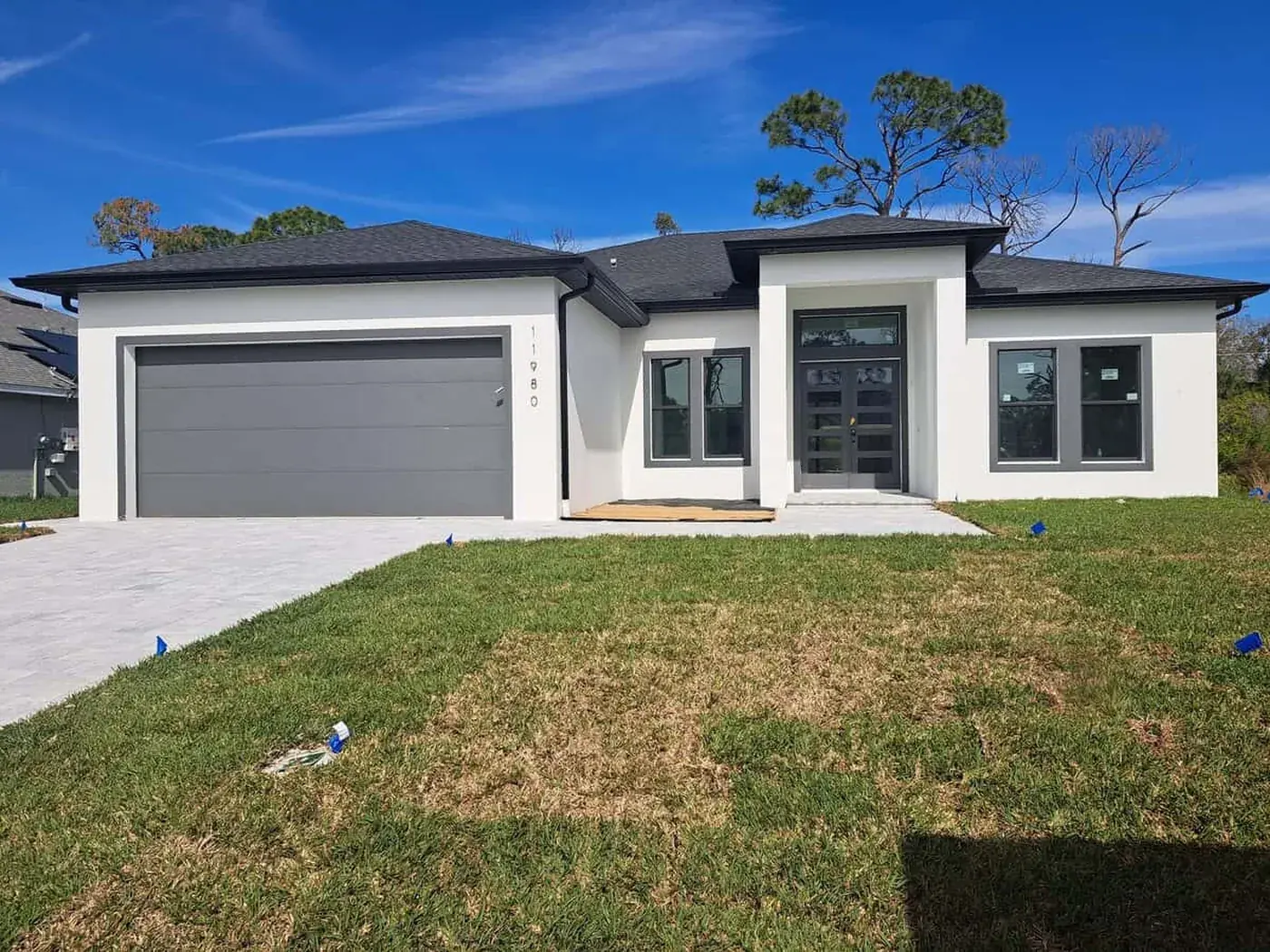
Selecting the right exterior paint is essential for Florida homes. Discover how to balance durability and cost when choosing products for your stucco exterior.
 Interior
Painting Interior Doors
Painting interior doors is a high-impact project that transforms a room. Discover why professional preparation and spraying are the keys to a factory-like finish.
 HOA
HOA Color Approval
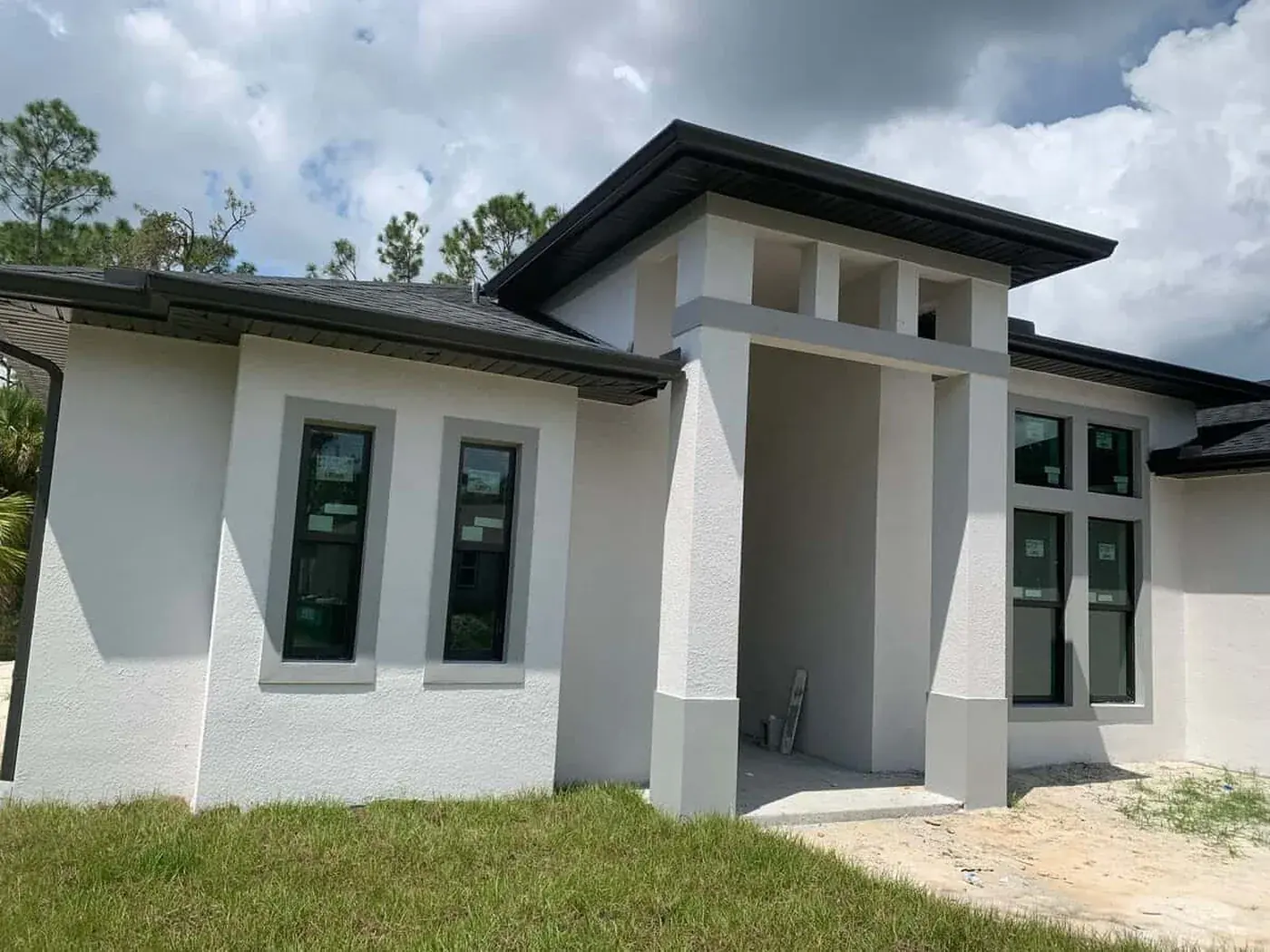
Most Florida HOAs need written ARC approval before you change, or even refresh, exterior colors. Here is what to submit and how to avoid delays.
Want a recommendation for your walls?
Send photos of your stucco and tell us your color plans. Your written quote lists the exact products and coats.